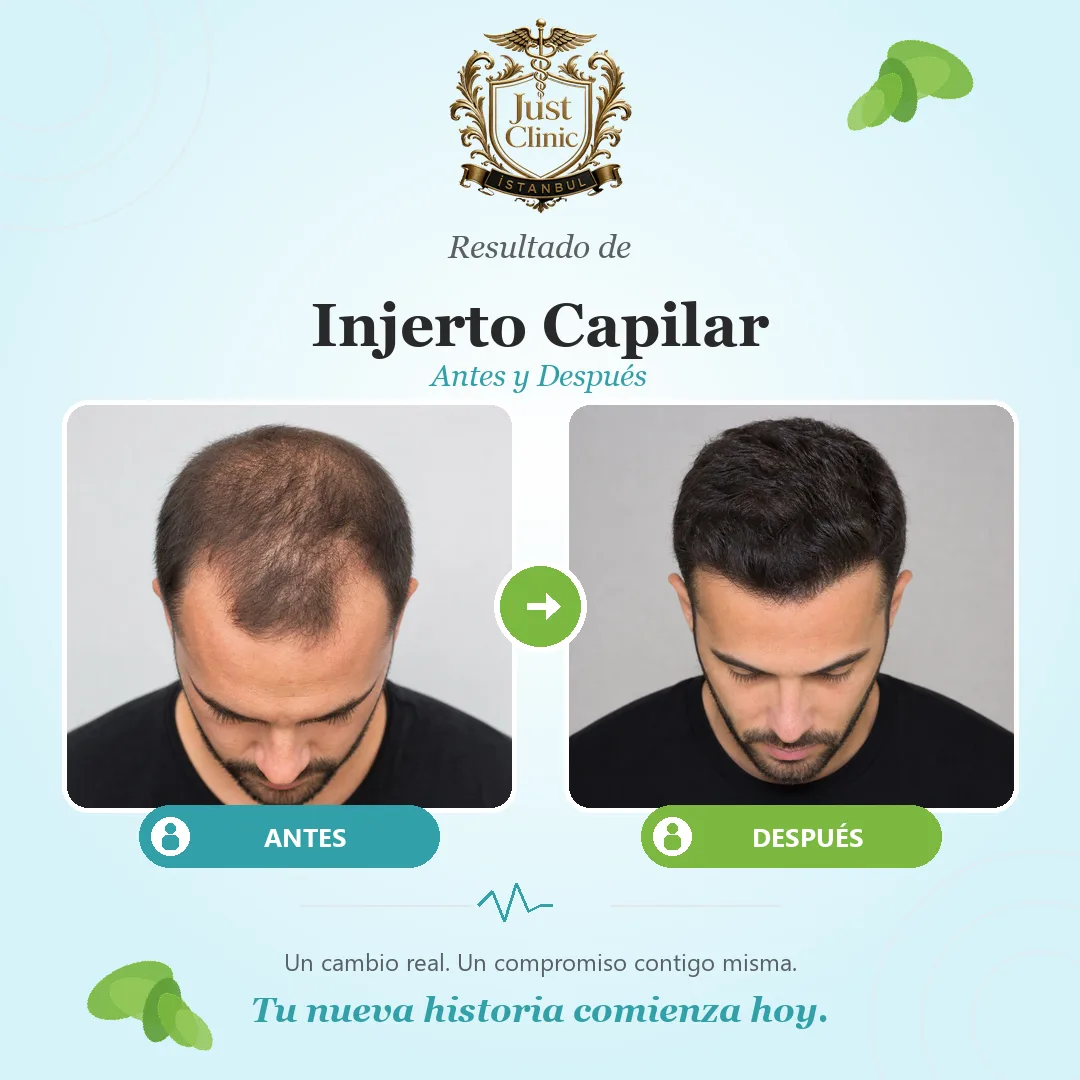
If you are considering a hair transplant in Turkey, the first decision is usually not whether you need FUE, DHI or a particular package.
You first need to understand whether hair transplantation is appropriate for the type of hair loss you are researching, what can realistically be achieved from the available donor area, who will perform the important stages of the procedure and how different providers compare.
Only after that does it become useful to compare techniques, graft plans and packages.
Turkey has large hospitals, specialist hair-restoration clinics and surgeon-led practices. Their prices, team structures, procedure models and aftercare arrangements can differ considerably.
There is no single clinic that can objectively be described as the best hair transplant clinic for every patient.
A more useful comparison is:
Which providers can clearly explain the diagnosis, donor plan, proposed technique, clinical responsibilities, expected scope, aftercare and total written cost?
Quick answer: what should I compare?
Before choosing a provider, try to answer these questions:
- What type of hair loss is being treated?
- Is my donor area suitable and how much reserve should remain?
- Who will design the hairline and treatment plan?
- Who extracts the grafts?
- Who creates the recipient sites?
- Who places the grafts?
- Why is FUE, DHI, Sapphire or another approach being proposed?
- What graft range is planned?
- What is included in the written price or package?
- What follow-up is available after I return home?
A clinic name, technique badge or headline graft number cannot answer these questions on its own.
Is Turkey a good option for a hair transplant?
Turkey has a large and highly visible hair-restoration market, particularly in Istanbul.
International patients can choose between specialist hair clinics, surgeon-led practices and larger healthcare organisations. This creates a wide range of prices and service models.
That choice is useful, but it also means that two providers advertising the same term — such as “FUE” or “DHI” — may not offer the same treatment structure.
The country alone therefore does not determine the quality of a hair transplant.
The more useful questions are:
Who is responsible for my treatment?
and:
What exactly is being proposed for my donor and recipient areas?
Is hair transplantation in Turkey safe, and how can I verify a provider?
Turkey or a clinic name alone cannot guarantee safety. Before choosing a provider, ask for written confirmation of:
- the healthcare facility;
- the medically responsible physician;
- who performs each procedure stage;
- where the procedure occurs;
- the follow-up pathway, including after you return home.
Use these details to compare providers. They do not by themselves guarantee safety or a particular result. The treating healthcare provider remains responsible for assessing medical suitability and explaining the risks of your plan.
Am I a suitable candidate for a hair transplant?
Suitability cannot be determined from the procedure name or price alone. The cause and pattern of hair loss, donor density, donor reserve, existing hair, previous surgery and future hair-loss pattern may all affect whether transplantation is a reasonable option. A healthcare provider should make that assessment before a graft number or technique is finalised.
How much does a hair transplant cost in Turkey?
The current Just Clinic Istanbul general hair-transplant guide uses an indicative public-market range of approximately €1,800–€4,500 per session. The final written plan can differ according to donor capacity, graft requirement, technique, provider and included services.
Different types of hair restoration currently have different guide ranges on the site:
| Treatment | Current indicative range |
|---|---|
| General hair transplant | €1,800–€4,500 |
| FUE hair transplant | €2,600–€4,500 |
| DHI hair transplant | €3,300–€5,000 |
| Female hair transplant | €3,300–€6,500 |
| Beard transplant | €2,600–€4,500 |
| Eyebrow transplant | €1,500–€3,200 |
You can review the current procedure-specific price guides below.
These figures are useful for planning, not for deciding which technique or provider is appropriate for an individual person.
Read the detailed guides:
- Hair Transplant Cost in Turkey
- FUE Hair Transplant Cost in Turkey
- DHI Hair Transplant Cost in Turkey
- Female Hair Transplant Cost in Turkey
- Beard Transplant Cost in Turkey
- Eyebrow Transplant Cost in Turkey
What price level should I expect from different types of hair transplant providers in Turkey?
Hair transplant prices in Turkey vary not only by technique, but also by the type of provider and service model.
The current Just Clinic Istanbul guide shows an indicative market range of €1,800–€4,500 for a general hair transplant.
A simple way to interpret that range is:
| Provider profile | Where the price may sit | Planning reference |
|---|---|---|
| Premium hospital setting | Often closer to the upper end of the range | around €4,500 |
| Established private hospital or specialist clinic | Often around the central part of the market | around €3,150 |
| Value-focused provider | Often closer to the lower end of the range | around €1,800 |
The €3,150 figure is simply the midpoint of the current €1,800–€4,500 planning range. It should not be interpreted as an official average price for a particular hospital category.
A higher price may reflect a larger hospital setting, more extensive international-patient services, a particular medical team, additional follow-up or a broader package.
A lower price does not automatically mean lower medical quality, and a higher price does not guarantee a better result.
The important comparison is still:
Who performs the procedure, what is included, how the donor area is planned, what aftercare is provided and what happens if a problem occurs?
Which hair transplant clinics should I compare in Turkey?
There is no useful reason to create a permanent “best 10 clinics” ranking.
Providers change, medical teams change and the needs of individual patients differ.
Instead, compare a small shortlist using the same criteria.
This is deliberately simpler than comparing dozens of variables.
For each provider, the most useful information is:
- who is responsible for the medical assessment;
- who performs each procedure stage;
- where treatment occurs;
- planned graft range;
- proposed technique;
- written price;
- package inclusions;
- aftercare arrangements.
Hospitals and healthcare providers in Istanbul
What are the best hair transplant clinics in Turkey?
This is a common search question, but “best” is not a single measurable category.
One person may prioritise:
- a particular surgeon;
- physician involvement;
- donor protection;
- natural hairline planning;
- experience with curly hair;
- female hair restoration;
- a lower overall budget;
- or more extensive aftercare.
Another person may prioritise something completely different.
A more useful approach is to create a shortlist of providers that meet your minimum requirements and compare them under the same criteria.
Just Clinic can help identify and compare options that match the treatment you are researching, expected service level and budget.
The treating healthcare provider remains responsible for determining medical suitability and the treatment plan.
Hospital or specialist hair clinic: which is better?
Neither model is automatically better.
A hospital or larger medical centre may provide broader medical infrastructure.
A specialist hair-restoration clinic may perform hair procedures much more frequently and may have a highly focused workflow.
A surgeon-led practice may centre the treatment around one particular physician.
The provider label alone is therefore not enough.
Ask:
Who is medically responsible for my case?
Who performs each stage?
Where does the procedure take place?
Who follows me afterwards?
Those answers are more useful than simply comparing the word “hospital” with the word “clinic”.
How important are reviews?
Patient reviews can be useful for understanding service experience, but a star rating alone cannot establish clinical quality.
Look for:
- recent reviews;
- a reasonable review volume;
- hair-transplant-specific experiences;
- comments about communication;
- first wash and aftercare;
- complaints and how they were handled.
Large healthcare organisations may have reviews covering many unrelated specialties, while specialist clinics may have reviews mostly about hair procedures.
That makes raw star ratings difficult to compare directly.
Reviews should therefore support a provider comparison rather than decide it on their own.
What happens if I have a problem after returning home?
Ask this before paying a deposit.
The written plan should make clear:
- who you contact;
- how remote follow-up works;
- when photographs or video review are used;
- what symptoms require local medical care;
- how an unexpected concern is escalated;
- whether later treatment involves additional cost.
Hair transplantation usually involves early graft care followed by a much longer hair-growth period, so aftercare should not end when the patient leaves Istanbul.
The current hair transplant guide describes a broad 10–18 month maturation period for the final hair-growth result.
How long should I stay in Istanbul after a hair transplant?
For trip planning, the current Sapphire and DHI package guides suggest two to three nights in Istanbul, with room for a fourth night if the first wash or flight timing requires it.
This covers the overall trip, including assessment, rather than a fixed stay after surgery. The treating provider should set your required stay and confirm when you can fly. Confirm the planned dates before booking travel; see the Hair Transplant Cost in Turkey guide for further planning details.
Should I buy an all-inclusive package?
An all-inclusive package may simplify travel arrangements, but “all-inclusive” does not have a universal definition.
Packages may include some combination of:
- procedure;
- local anaesthesia;
- blood tests;
- medication;
- first wash;
- aftercare kit;
- hotel;
- airport and clinic transfers;
- interpreter or coordinator support.
Flights, additional nights, PRP or another procedure may be separate.
The site's Hair Packages category currently lists dedicated FUE/Sapphire, DHI, female, beard and eyebrow packages, along with combined treatment packages.
Hair Transplant Packages in Turkey
If you already know Istanbul well, have accommodation or family/friends in the city, or prefer to organise your own travel, a treatment-only arrangement may also be worth comparing.
The important point is to compare the medical scope first and the travel extras second.
Now the question changes: which hair transplant approach should I research?
Once someone has decided to investigate hair restoration seriously, the questions usually become more specific.
From this point, the questions become more specific to the technique or type of hair restoration being considered.
FUE or DHI: which one should I choose?
There is no general rule that DHI is better than FUE or that FUE is better than DHI.
FUE usually refers to the method used to remove individual follicular units from the donor area.
DHI is commonly used to describe implantation with an implanter device. It does not necessarily replace FUE harvesting.
The current Just Clinic guide therefore treats the technique names as different parts of the procedure rather than simple competing brands.
A more useful question to ask the provider is:
Why is this method being recommended for my donor area, recipient area and treatment plan?
FUE Hair Transplant Cost in Turkey
DHI Hair Transplant Cost in Turkey
Is Sapphire FUE better than standard FUE?
“Sapphire” normally refers to the material used for a recipient-site blade.
It should not be treated as proof that the final density, graft survival or healing will automatically be better.
The relevant questions are:
- what part of the procedure the sapphire instrument is used for;
- why the provider prefers it;
- whether it changes the plan;
- whether it changes the price.
The current hair-transplant guide describes Sapphire as an instrument distinction rather than a guaranteed clinical upgrade.
Sapphire Hair Transplant Package
How many grafts do I need?
An online photograph cannot reliably determine a final graft number.
Planning depends on:
- donor density;
- hair calibre;
- curl;
- scalp-to-hair colour contrast;
- recipient-area size;
- existing hair;
- future hair-loss pattern;
- previous transplantation;
- desired density.
More grafts are not automatically better.
The donor area is finite, so preserving future donor reserve can be more important than maximising one session.
For the evidence behind donor assessment:
Donor Mapping Before Hair Transplantation — Academic Research
Preventing FUE Overharvesting — Academic Research
For a deeper evidence-based explanation, see our research on donor mapping and prevention of FUE overharvesting.
Who should perform the different stages of a hair transplant?
This is one of the most useful questions to ask a provider.
Request a written explanation of who is responsible for:
- diagnosis;
- donor assessment;
- treatment planning;
- hairline design;
- graft extraction;
- recipient-site creation;
- graft placement;
- medical monitoring;
- follow-up.
A package name such as FUE or DHI does not identify the people performing those stages.
This question is often more useful than asking only:
“How many grafts will I get?”
Is female hair transplantation different?
It can involve different planning questions.
Before focusing on technique, the cause and pattern of hair loss should be assessed because not every form of female hair loss is best approached with transplantation.
A provider should explain:
- what pattern is being treated;
- whether donor supply is suitable;
- whether existing hair is at risk;
- what area would be transplanted;
- expected limitations.
The final decision requires clinical assessment rather than simply choosing FUE or DHI online.
Female Hair Transplant Cost in Turkey
Female Hair Transplant Package
How is beard transplantation different from scalp hair transplantation?
The donor source may still be scalp hair, but the recipient-area design is different.
Direction, angle, density and the transition between transplanted and existing beard hair are important planning questions.
Ask:
How will the beard pattern be designed?
How many grafts are planned and from where?
How will direction and density be controlled?
Do not assume that a scalp-hair price or graft plan automatically applies to beard transplantation.
Beard Transplant Cost in Turkey
What should I ask before an eyebrow transplant?
Eyebrow transplantation requires particularly careful planning of direction, angle and shape.
Useful questions include:
- how many grafts are planned;
- which donor hairs will be selected;
- how the eyebrow shape is designed;
- how single-hair grafts are used;
- who creates the recipient sites;
- how future trimming and maintenance are explained.
The lowest graft number or lowest price does not identify the most appropriate eyebrow plan.
Eyebrow Transplant Cost in Turkey
What if I have already had a hair transplant?
A revision or repair case should not automatically be planned like a first procedure.
The provider may need to consider:
- remaining donor reserve;
- existing graft direction;
- scarring;
- overharvested areas;
- unnatural hairline design;
- density gaps;
- continued native-hair loss.
In some cases the realistic goal may be improvement rather than complete correction.
This is another reason a headline package should not replace an individual assessment.
What should I read before choosing a provider?
The Hair Transplant Academic Research library currently includes evidence summaries on:
- graft handling and hydration;
- donor mapping;
- FUE overharvesting;
- local anaesthesia and comfort;
- manual versus powered FUE.
Hair Transplant Academic Research
For practical planning and safety questions, see our Hair Transplant Patient Guides.
Is Hair Transplant in Turkey Safe?
How should I build a shortlist?
Start with a small number of providers rather than messaging dozens.
For each one, obtain:
- named provider;
- facility;
- diagnosis or assessment approach;
- donor plan;
- proposed recipient areas;
- technique;
- planned graft range;
- who performs each stage;
- full written price;
- inclusions and exclusions;
- aftercare plan.
Then compare them side by side at a high level.
You do not need a 20-row spreadsheet.
The goal is to identify meaningful differences, not manufacture a numerical ranking.
Can Just Clinic tell me which hair transplant clinic is best?
There is no single provider that can objectively be described as best for everyone.
Just Clinic Istanbul is an independent marketing and lead-generation platform, not a healthcare provider.
We can help identify and compare available providers according to the procedure being researched, expected service level and budget.
The final medical assessment, technique, graft plan and treatment recommendation must come from the healthcare provider responsible for the case.