

If you have several clinic tabs open and still cannot tell what you would actually be paying for, start with one question: do these offers describe the same care? A lower headline figure may cover fewer stages, a different device or a shorter period of support. A higher figure needs an explanation too.
This article helps you compare written proposals for cosmetic surgery, dental treatment, hair and beard restoration, and the other specialties below. You can go straight to your procedure, try the filled-in dental example or use the checklist to turn missing details into questions. You do not need to have chosen a technique before making an enquiry.
What should you compare before looking at the total?
Compare the same treatment goal, the same treatment stages and the same services. An implant body is not a completed replacement tooth; a breast lift is not automatically a lift with implants. For treatment in Turkey, separate the clinical proposal from the travel arrangements, then look at what the whole plan would require.
Keep three documents together: the proposed treatment plan, the itemised quotation and the terms that apply if something changes. An indicative website range can help you start researching, but only an individual assessment can establish what a provider proposes for you. The questions below help you identify the information still missing.

Are hospital care and anaesthesia included in a surgery quote?
Only if the written offer includes them. A surgeon’s fee may exclude the anaesthesia service, operating theatre or admission. Ask whether the amount is for the complete planned episode of care and what an additional hospital night would cost. For day surgery, confirm the discharge arrangements; for an overnight stay, distinguish hospital nights from hotel nights. This is a useful first check before comparing the procedure-specific details below.
What can organised research tell me about an offer?
It can reveal differences in scope and unanswered questions; it cannot decide whether a treatment is right for you. Before buying a home, you would want to know what a survey covered. A similar habit helps here: identify what an offer actually says before relying on its headline. Use the NHS advice on choosing a practitioner to prepare questions about qualifications and responsibilities. The clinician’s explanation of your options still matters more than the length of a package list.
Same Treatment Goal, Different Quotes: A Worked Example
Imagine that you want to replace one missing tooth. These three offers are invented examples of wording, not quotations from real clinics or accounts of patient treatment. No prices have been assigned: the point is to make the scope comparable first.
| Example offer | What is explicitly included | What still needs an answer |
|---|---|---|
| A | Implant body. | Are the abutment and final crown charged separately? What would the complete replacement tooth cost? |
| B | Implant body and abutment. | Which final crown material is proposed, and is its supply and fitting included or additional? |
| C | Implant body, abutment and final crown. | Does this also include diagnostic imaging and any temporary restoration? How would extractions, grafting or other additional treatment be charged if needed? |
The body sits in the jaw; the abutment connects it to the replacement tooth. The crown is another part of the completed restoration. The FDA’s explanation of dental implant components helps make that distinction clear.
We can see which details are clear; we cannot yet tell which quote is cheaper. Offer C describes more components, but that alone tells us neither its total cost nor whether the proposed treatment suits the person. Ask each provider to clarify the same list of items before comparing totals. See the single-tooth and full-arch questions for the next level of detail.
Included, Excluded or Not Yet Confirmed?
Mark each relevant item using the provider’s written answer. Unanswered does not mean free. “Included” should describe a defined service; “excluded” means you need to allow for it separately if required. Leave an item as “not yet confirmed” while its scope or payment responsibility remains unclear.
Use the comparison area below for the items relevant to your proposal. Change each status, select the questions you want to send, then copy them into a single message. Nothing is sent by using this checklist.
Your offer checklist — untick items that do not apply or that you do not want to ask about.
Items marked “included” are left out of the message. For excluded items, the message asks about separate charges and arrangements. Leave partially explained services as “not yet confirmed”.
Compare two written offers side by side
Enter the wording from offers A and B in the matching rows. Record what is included, excluded or still unclear. If an item does not apply, say so in that field.
Entries stay on this page and are not saved or submitted by this tool. Copy your notes before leaving. Avoid adding personal medical details.
Keep the quoted amount and your estimate separate, in the stated currency. Leave unknown amounts blank. This tool does not add totals or convert currencies.
Information to clarify
These prompts reflect what you entered, not an assessment of the clinic, safety, quality or suitability. An empty field means information has not been recorded here; it does not prove the provider omitted it.
Does a free revision mean every additional expense is covered?
No. Ask for a written breakdown of what “free revision” actually covers. The surgeon’s fee may be waived while hospital and theatre charges, anaesthesia, materials, tests, accommodation and another journey remain payable. Check each item separately. Ask whether dissatisfaction with the appearance and treatment of a complication follow the same terms, who assesses the request, what time limits apply and which exclusions could affect it. Clarify how a return visit would be arranged and who would pay for care before that visit. Keep the reply with the original quotation. A promise of free revision alone does not establish that your total additional spending would be zero or that another procedure would be clinically appropriate.
NHS: questions about further surgery, aftercare and returning abroad
Hair, Beard and Eyebrow Restoration: Planning and Aftercare
What does a 3,000-graft hair transplant offer actually tell me?
First establish whether 3,000 grafts is a plan assessed for you or simply a package ceiling. A graft is not the same as one hair. Compare the areas to be treated, estimated distribution, donor-area assessment and the clinician’s role in planning and carrying out the procedure.
The same graft count can give different coverage because the area of hair loss and hair characteristics vary. A higher number alone does not make an offer better. Ask how the plan considers future hair loss and preserves donor supply if another session is ever discussed. Read the NHS information on hair transplant surgery.

What should FUE aftercare include?
FUE aftercare should cover the first review, washing instructions, any supplied products and the schedule for checking progress. A bottle of shampoo does not tell you who will assess the donor and recipient areas if you have a concern. Ask for a named clinical contact and an explanation of what remote reviews can and cannot establish.
Temporary shedding can occur, and the early appearance is not the final result. Request written advice on expected changes and when to seek assessment. The FUE procedure and pricing page can help you compare the proposed care with the advertised scope.
Does DHI mean that my hair will not need shaving?
DHI does not, by itself, mean that no hair will be trimmed. Donor-area trimming and recipient-area trimming are separate decisions. Ask whether the plan is fully shaved, partially shaved or unshaven, and which areas would be clipped. If appearance on returning to work matters, raise that before a plan is made.
Existing hair length, the proposed graft count and the details of the procedure can affect the offer. Ask why an unshaven approach is considered suitable for your circumstances rather than relying on a package label. The ISHRS explanation of shaved and unshaven terminology clarifies what those labels mean.
Does a higher-priced Sapphire or DHI offer mean a better result?
No technique name, device description or higher price proves that one offer will produce a better result for an individual. Sapphire commonly describes a type of tip used to make recipient sites, while DHI describes an implantation approach. Ask which method is used at each stage and why it is proposed for you.
Extraction, graft handling, placement and hairline planning all contribute to the plan. If offers differ in graft count, shaving approach or follow-up, the price gap cannot be explained by the technique label alone. Discuss your hair loss, donor supply and the healthcare team’s responsibilities. The site’s academic article on protecting hair grafts covers handling considerations.
What needs assessing before a hair transplant for female pattern thinning?
The cause and pattern of hair loss, the donor area and the condition of existing hair need assessing before transplantation is proposed. Visible thinning alone does not establish that surgery is appropriate. Ask whether the assessment considers underlying causes and what alternatives may be relevant.
If transplantation is proposed, the plan should explain the areas to treat, estimated graft requirements and how existing hair will be protected. It should also describe any shaving needed, which may affect your plans for work and everyday appearance. The female hair transplant assessment and costs page gives context for comparing a provider’s proposal.
Does filling beard patches involve the same scope as creating a full beard?
Not necessarily. Filling a few gaps may involve a smaller or differently shaped recipient area than creating broader beard coverage. Ask which areas are included, how many grafts are estimated and how the donor site will be assessed.
Hair direction, thickness and curl pattern influence how transplanted hair may blend with existing facial hair, so ask whether donor characteristics suit the intended beard design. Donor hair is finite: planning should consider both the beard and any future scalp restoration, rather than treating each area in isolation. The ISHRS beard transplant information and beard transplant price page are useful starting points.
Does an eyebrow transplant cover both brows, and what maintenance follows?
An eyebrow restoration offer should say whether it covers one brow or both, the planned shape, estimated graft count and first reviews. A short package label may not spell out the sides included, so request the scope in writing.
Eyebrow hairs grow in a direction that needs careful planning. Hair taken from the scalp may continue growing at scalp length, so regular trimming can form part of long-term care. Ask who discusses the design with you, which instructions are provided and how follow-up is handled. The ISHRS overview of eyebrow and eyelash restoration provides background for a clinical discussion.
What do PRP, “hybrid” methods and a hotel add to a hair transplant package?
They describe different things: PRP is a proposed clinical addition, “hybrid” needs a precise explanation of the methods, and a hotel is accommodation. Ask what each adds to your own plan rather than treating a longer list as evidence of better hair growth.
For PRP, clarify the number and timing of sessions, who provides them and whether later sessions require another visit. For a hybrid approach, ask which method is used at each stage and in which areas. Confirm the hotel nights, room type and companion arrangements separately. A technique label or optional addition cannot guarantee a result.
Rhinoplasty: Cosmetic Goals, Breathing and Revision
What exactly is included in a rhinoplasty proposal?
The proposal should identify the work planned on the nose, alongside the clinical services in the common checklist above. “Rhinoplasty” alone does not tell you whether the plan concerns the bridge, tip, septum or a combination. Ask the surgeon to explain how the proposed changes relate to your goals.
Keep the clinical stay and hotel stay separate when comparing travel-inclusive offers. If a consultation could change the planned operation, ask when the quotation becomes definitive and whether you can reconsider before paying further charges. Compare the rhinoplasty options and price ranges with the scope of your own proposal.

What changes when revision rhinoplasty involves rib cartilage?
A rib-cartilage revision adds a graft-related part to the plan, alongside work on a previously operated nose. Ask where the cartilage will come from and, if it is taken from your own rib, what the donor-site procedure and recovery involve. The surgeon should explain why that source is being considered.
Previous operations and available cartilage can affect the reconstruction proposed. Supply earlier records through the route the clinician requests, then ask which findings could change the plan. The revision rhinoplasty page helps distinguish a revision proposal from a first-time operation.
Is piezo rhinoplasty necessarily suitable for a thick-skinned nose?
No. Piezo describes an instrument used for bone work; it does not resolve every consideration associated with skin thickness. Ask which steps would use it and what the surgeon expects your skin characteristics to mean for the visible change.
Photographs of people with different anatomy, skin or lighting may not answer that question. Discuss swelling, the limits of tip definition and the expected assessment timeline for your case. The useful comparison is the proposed anatomical work and its limitations, rather than a premium attached to an instrument name.
Does cosmetic rhinoplasty also address breathing problems?
Not automatically. Cosmetic reshaping and assessment or treatment of airflow concerns are distinct parts of a plan. Tell the provider about breathing symptoms and ask who will evaluate them before an operation is agreed.
If functional work is proposed, have it named separately in the treatment plan and quotation. A cosmetic package cannot establish that the cause of a breathing complaint has been identified or promise that it will be corrected. The NHS explanation of rhinoplasty provides background for discussing expectations and risks.
Breast Surgery: Implants, Lifts and Revision Plans
What should “implants included” mean in breast augmentation?
It should identify the implant make and model, rather than simply promise a pair of implants. Ask which size and specification are proposed, how the surgeon reached that choice and whether a change after assessment would affect the quotation. The breast augmentation options and costs provide a starting point.
The same implant volume does not produce the same cup size for every person: chest width, existing tissue and anatomy differ. A useful consultation explains those limits and future care, including the possibility of later surgery. The FDA information on breast implant risks sets out issues to discuss.

How does an implant-free breast lift differ from augmentation?
A breast lift reshapes and raises existing breast tissue; augmentation adds volume using implants or another specified approach. A lift without implants should therefore be described as such, including the planned incisions and whether tissue removal is involved.
Explain whether your main concern is position, volume or both. Ask what the proposed lift can realistically change, particularly if upper-breast fullness is a priority. This makes it easier to understand why one surgeon proposes a lift alone and another discusses a lift with implants, rather than treating the two offers as equivalent.
What if a breast lift with implants is recommended in two stages?
A two-stage plan needs a quotation and timetable that distinguish the first operation from the later one. Ask whether both stages are included, what has to be assessed between them and which expenses would recur on a second visit.
For either a combined or staged approach, identify the lift, implant specification and intended goals separately. Ask why the sequence is recommended for your anatomy and what might change it. The FDA’s breast implant risk information is relevant to the implant component; it does not replace discussion of the lift and its scars.
Can a breast reduction quote promise a particular cup size?
No. A quotation cannot guarantee a bra size or exact symmetry. Bra sizing varies, and the achievable change depends on anatomy, healing and the surgical plan.
Describe the problems you want to address and ask how the surgeon will discuss the intended reduction in terms you can understand. The consultation should cover likely scars and possible changes in sensation as well as appearance. For follow-up, clarify how wound concerns will be assessed after you return home and whether the planned garment and fitting are supplied.
Does implant replacement include removal and capsule surgery?
Only when those steps are specified. Removing the old implant, treating the surrounding capsule and inserting a replacement are different parts of a plan. A replacement package does not establish that every type of capsule surgery is included or needed.
Ask the surgeon what your history and any relevant imaging suggest, what capsule treatment is proposed and how unexpected findings would be handled. If a lift is also being considered, have it listed separately. The breast implant replacement page gives a more focused basis for comparing these components.
Why might breast asymmetry require a different plan on each side?
The cause of the asymmetry and any previous surgery may differ between the two breasts. A revision could involve different steps on each side, so “correction of asymmetry” is not a sufficiently detailed description of the operation.
Ask the surgeon to set out the proposed work separately for the left and right sides, including any implant, capsule or lift component. Previous records can help explain what has already been done. The discussion should establish realistic limits; a written plan is not a promise of perfect symmetry.
How do pregnancy and breastfeeding plans affect the timing of breast surgery?
Pregnancy and future breastfeeding plans are relevant to timing and discussion of augmentation. Ask the surgeon how pregnancy may alter breast shape, whether you may prefer to wait and what future changes could mean for the result or any later treatment.
Many people can breastfeed after breast surgery, but surgery can affect milk production and feeding in different ways. Discuss your history, goals and timing with the clinician rather than inferring an individual outcome from the implant price. The CDC information on breastfeeding after breast surgery explains that experiences vary.
How should I compare Mia with conventional breast augmentation?
Compare the actual procedure, device and intended change, because the Mia name does not make the proposals equivalent. Ask which implant is used, what the procedure involves and what the surgeon considers achievable for your anatomy.
If the offers describe different anaesthetic approaches, explain your concerns and ask what monitoring and recovery arrangements each entails. Also clarify whether either proposal addresses a lift or only augmentation. A branded technique does not establish suitability or a better outcome; the surgeon should explain the reasons for recommending it and the alternatives.
Face, Neck and Non-Surgical Treatments: Understanding the Options
What does a combined facelift and neck lift actually address?
It should describe the facial and neck areas being treated, and how the two parts of the operation fit together. SMAS and deep-plane terminology needs explaining in relation to your anatomy; a technique name alone does not establish the extent of neck work.
Ask whether the proposal includes the jawline, neck skin or other specified structures, and whether eyelid or brow surgery is separate. Comparing the facelift and neck lift pages can help you identify where two combined offers differ.

Does eyelid surgery mean upper lids, lower lids or both?
It can mean any of those, so the offer should name upper or lower lids and one or both eyes. A combined upper-and-lower procedure has a different scope from an upper-lid operation alone.
Ask what the surgeon believes is causing the concern you see: eyelid tissue and brow position are not the same issue. If a vision complaint is part of your reason for seeking treatment, explain it before accepting a cosmetic plan. The NHS eyelid surgery information helps prepare that discussion.
What does “endoscopic” explain about a brow lift?
It describes the approach used to view and perform parts of the operation; it does not, by itself, define which brow areas are treated. Ask where the incisions would be and what change is proposed in the inner, central or outer brow.
Have any eyelid operation listed separately. If two proposals use different approaches, ask why each is being recommended and what that means for scars, recovery and achievable change. Comparing names without those details can make different operations appear interchangeable.
Are a temporal brow lift and eyelid surgery the same procedure?
No. A temporal brow lift addresses the outer brow, while eyelid surgery treats eyelid tissue. If both appear in a proposal, ask what each is intended to change and why both are being considered.
A useful written plan makes that distinction visible: the area addressed, the incision and the expected limitation of each operation. That allows you to compare a combined plan with a single procedure without assuming the additional operation is merely an alternative name.
How does a chin implant differ from sliding genioplasty?
A chin implant adds a device to alter projection; sliding genioplasty repositions chin bone. The materials, operative work and assessment differ, so the proposals should identify the method rather than simply say “chin surgery”.
Ask why that approach fits the change you want, whether concerns about your bite need a separate assessment, and what device or bone work is included. The ASPS explanation of chin surgery describes the basic distinction. A fee difference alone cannot tell you which approach is suitable.
Does otoplasty include both ears and dressing reviews?
The offer should specify one ear or both, along with the planned dressing checks and any supplied headband. A unilateral correction should not be compared with bilateral surgery as though the scope were identical.
Ask whether replacement dressings are supplied, who checks healing before travel and how long the surgeon expects the headband to be needed in your case. These practical details matter if you are planning a return to work or arranging help during recovery.
Why consider future facial appearance before buccal fat removal?
Because the decision concerns lasting removal of tissue from a face that will continue to change over time. Buccal fat removal is not a suitable way to slim every face; anatomy, age and your goals need discussing together.
Ask what the surgeon expects the operation to change now and which longer-term limitations matter for you. A photograph of someone else cannot predict that. The ASPS information on buccal fat removal is useful preparation for discussing suitability and risks.
Does facial fat transfer also contour the donor area?
Not necessarily. Collecting a limited amount of fat for facial transfer is different from performing full contouring of the donor region. Ask where fat will be collected and whether any separate shaping of that area is actually proposed.
Some transferred fat may not remain, so clarify how the provider assesses the result and whether a later session would be a new treatment with a separate fee. The ASPS overview of fat injections explains why the collection and transfer stages belong in the same discussion.
Do a lip lift and lip filler aim for the same result?
A lip lift is surgery that changes the relationship between the upper lip and nose; filler adds volume by injection. The procedures do not automatically address the same concern and have different duration, risks and costs.
Explain the change you want and ask the clinician which option may suit it, what the quote includes and whether reviews or further treatment are separate. The ASPS discussion of lip lifts and other lip augmentation explains the distinction.
Does cheek dimple surgery cover one cheek or both?
The plan should specify one cheek or both, including the intended position of each dimple. Ask whether the surgeon expects the appearance to differ at rest and when smiling, and how that will be discussed before the procedure.
Perfect matching is not something a package can guarantee. Discuss asymmetry, scarring and healing, and find out how a later concern would be assessed. A bilateral offer and a one-sided correction need separate descriptions even when both are called dimple surgery.
What do syringe counts tell me about dermal filler offers?
For filler offers, identify the product, quantity, treatment area and clinician’s fee. A syringe count alone does not show whether two offers address the same concern or use the same product.
Ask who administers the filler, what follow-up is available and how complications are handled. Accidental injection into a blood vessel is rare but can cause serious tissue injury, vision problems or stroke; discuss how the provider recognises and responds to this risk. The FDA information on dermal fillers explains these risks and the importance of qualified practitioners.
Is Botox quoted by area or by unit?
Botox can be priced by area or units, so ask what quantity and treatment the quote describes, including the product and areas covered. “One area” does not necessarily represent the same amount across providers or people.
Ask who assesses and administers treatment, whether a review is included and what any adjustment would cost. Ensure the offer identifies the intended treatment rather than relying on an informal label. Price comparison cannot establish suitability or predict effect; discuss those points with the treating professional.
Do “awake” and “mini” describe the same facelift?
No. “Mini” describes the extent of surgery, while “awake” refers to an anaesthetic approach. Ask for the actual operation and the anaesthesia or sedation plan to be explained separately, including who monitors you.
Local anaesthesia does not remove surgical risks or the need for recovery care. If awake blepharoplasty is also discussed, have the eyelid procedure named separately. The relevant comparison is the work proposed and the monitoring arrangements, rather than an assumption that these labels describe the same operation.
Tummy Tucks, Liposuction and Body Contouring: Defining the Areas
Does a tummy tuck include repair of separated abdominal muscles?
It may, but the treatment plan must say whether repair is proposed or whether the operation concerns excess skin alone. Ask the surgeon what the assessment shows and whether any liposuction or other additional procedure is included. The tummy tuck types and costs help distinguish the advertised options.
The incision, extent of skin removal and any muscle repair are more informative than the package name. Discuss how those planned steps affect lifting, work and help at home. The ASPS tummy tuck information provides background for the consultation.

After a caesarean birth, would a mini or full tummy tuck address my concern?
A previous caesarean does not determine the choice: the current skin, muscle findings and position of the existing scar need assessing. Ask how the proposed incision relates to that scar and whether muscle repair is being considered.
If you have young children, explain the lifting and childcare demands you expect after returning home. The surgeon’s individual restrictions may affect timing and the help you need. This is a more useful basis for planning than choosing a smaller-sounding operation without knowing which area it addresses.
How do I compare liposuction offers for several areas?
Have every region named, because one provider’s “area” may not match another’s. A proposal for the abdomen and flanks should not be compared with “three areas” until the second provider has explained what those areas are.
Ask whether both sides are included and whether another operation, such as skin removal, is proposed alongside fat removal. Liposuction is not a weight-loss guarantee. The liposuction procedure and pricing page and ASPS procedure information provide context for comparing the named regions.
What does VASER 360 cover around the waist?
“360” needs an anatomical definition in the proposal: ask which parts of the abdomen, flanks and back it includes. The VASER name identifies a technology, not a guarantee that every region you have in mind will be treated.
Ask which compression garment is supplied, whether fitting is included and whether a replacement would be separate. If another region is excluded, have that made explicit before comparing the VASER 360 options with a personal plan.
Are inner and outer thigh liposuction treated as one area?
Not necessarily. Ask whether the proposal includes the inner thighs, outer thighs or both, and whether both legs are covered. Without that description, area counts can make unlike offers look comparable.
Also distinguish fat removal from a thigh lift. If excess skin is your main concern, ask which part of the proposed treatment is meant to address it. A quote for liposuction alone should not be read as including skin-removal surgery.
How should bra-line and back areas be described in a liposuction plan?
The plan should name the actual regions, such as the upper back, bra-line folds or flanks, rather than rely on “back liposuction” as a complete description. Ask whether each region is included on both sides.
“Bra roll” may not correspond to another provider’s area count. Describe the concern you want assessed and ask how skin laxity affects the proposed approach. Removing fat and removing excess skin are different procedures, even when they concern the same visible fold.
What changes when liposuction is added to an arm lift?
The plan includes both fat removal and skin-removal surgery, so it should describe the area addressed by each. Ask whether the lift extends into the armpit or chest and where the expected scars would lie.
That extent can matter for everyday tasks such as dressing and reaching. Explain your work and home responsibilities, then ask about the individual recovery restrictions. A short arm-lift label does not tell you whether liposuction or a more extensive incision is included.
Why does the incision matter in a thigh lift after major weight loss?
The incision indicates which excess skin the proposed lift is intended to address and where a scar may remain. Ask the surgeon to describe its extent and how it relates to your current skin distribution.
Weight stability also belongs in the assessment; major weight loss does not lead to one standard operation. If liposuction is proposed too, have it listed separately. Discuss practical recovery needs, including walking, clothing and help at home, before deciding whether the planned timing works for you.
Will Renuvion/J-Plasma after liposuction correct every kind of loose skin?
No. The technology cannot be assumed to address every degree or cause of skin laxity. Ask why it is proposed for your case and how its likely limits compare with the alternatives.
The FDA’s updated Renuvion/J-Plasma communication covers both earlier warnings and later clearances for specific handpieces and uses. In April 2023, the Renuvion APR handpiece received clearance for coagulating soft tissue beneath the skin after liposuction for aesthetic body contouring. That is not clearance for every use of every J-Plasma device.
Ask for the exact device, handpiece, intended use and current instructions, and whether its use adds to the proposed liposuction fee. A clearance does not mean a treatment is risk-free or appropriate for everyone.
What needs assessing before revision for uneven liposuction results?
Unevenness after liposuction needs assessment before a revision price can be set. Early swelling can make a contour look uneven, so the clinician may need to distinguish that from a persistent concern after healing.
Further treatment might involve adding or removing volume, addressing skin or treating a scar; it is not always another round of liposuction. Ask what records are needed and which options are being considered. The revision body contouring price page is a category reference, not an individual quote.
Which operations are actually included in a Mommy Makeover?
There is no single fixed combination. A Mommy Makeover may include a tummy tuck, breast lift, augmentation or liposuction, but the offer must name the operations and regions actually proposed.
Ask whether the breast component involves implants, a lift or both, and whether abdominal muscle repair is included. Discuss whether the procedures should be combined or staged, and how the recovery requirements fit your responsibilities at home. The Mommy Makeover combinations help you identify the individual components to compare.
Can lipo 360, BBL and a tummy tuck be planned during one trip?
Only an individual assessment can establish whether that combination is appropriate; fitting it into one trip is not the deciding factor. Ask the surgeon how the total extent of surgery and the recovery needs influence the recommendation.
In particular, discuss positioning and mobility after the proposed operations, what assistance would be needed and whether staging is preferable. If staging is advised, request the separate visits and care arrangements. The joint safety statement on gluteal fat grafting provides relevant background for the BBL part of that discussion.
Is massage after liposuction included, and how many sessions are proposed?
Only the written care plan can confirm whether massage is included, optional or not recommended for your situation. If it is proposed, ask who provides it, how long sessions last and how the timing and number are decided.
A fixed package of sessions does not establish that everyone needs the same treatment. Follow the treating clinician’s advice and ask where pain, swelling or another concern should be assessed before arranging further sessions. Compare the total course with the per-session fee, including any sessions after you return home.
Buttock Contouring: Fat Transfer, Implants and Reduction
Which donor areas and safety arrangements should a BBL proposal describe?
A BBL offer should identify fat-harvest areas, the transfer plan and recovery care. Ask which anatomical plane is proposed for placement and whether ultrasound guidance is used. Fat embolism is a serious risk of gluteal fat grafting, so discuss how risk is reduced and what monitoring is planned.
Check whether any requested harvest area is outside the offer and what post-operative instructions or support are included. The ASPS buttock enhancement information and joint safety statement on gluteal fat grafting offer background.

What should a lipo 360 with BBL package specify?
It should identify the regions counted in “360”, where fat is collected and the intended transfer areas. Ask whether any extra area you requested is outside the quoted scope.
Keep the clinical plan separate from optional accommodation and transfers. The combination also needs a recovery plan that accounts for the treated donor areas and buttocks; a package label does not provide that detail. The lipo 360 with BBL page is a useful reference for the combination to discuss with the surgeon.
Are buttock implants and BBL comparable treatments?
They pursue contour changes through different methods: implants use a device, whereas BBL transfers fat from donor areas. The available donor fat, the proposed implant or transfer and the associated risks need separate discussion.
Ask what each option could address in your case and why one is being proposed. A quote for an implant does not include fat-harvest work unless it says so, and a fat-transfer proposal does not specify an implant. The ASPS buttock enhancement overview describes these approaches.
Why does buttock reduction need a different plan from enlargement?
Reduction and enlargement seek different changes and may involve different tissues and operations. An enlargement offer cannot answer what is included in a reduction proposal.
Ask whether the proposed reduction concerns fat, excess skin or another specified issue, which regions are treated and whether both sides are included. The written plan should name the actual procedure and likely scars where relevant. “Buttock surgery” is too broad a description to compare scope or recovery needs.
Men’s Body Contouring: Chest Surgery and Combined Procedures
Does gynaecomastia treatment include gland removal?
It may involve gland excision, liposuction or both, depending on the findings. Ask which tissues the proposed treatment addresses and have those steps named in the quotation; a liposuction-only offer does not establish that gland removal is included.
Clarify how the surgeon will assess the chest and whether investigations are needed before a plan is confirmed. The gynaecomastia treatment page helps explain why proposals with the same broad label may describe different work.

Does six-pack liposuction guarantee lasting muscle definition?
No. It shapes contours rather than creating muscle strength, and it cannot prevent later weight changes from altering appearance. Anatomy, healing and body composition influence the result.
Ask which areas would be treated and how the proposed contour relates to your existing abdominal muscles. If another procedure is included, have it listed separately. The discussion should make the limits clear, particularly if your expectation is permanent definition regardless of future changes in weight or fitness.
Does a Daddy Makeover always include chest surgery and liposuction?
No. “Daddy Makeover” is a name for a combination, not a standard operation. Ask whether the proposal includes gynaecomastia surgery, liposuction or other procedures, and which regions each addresses.
If chest treatment is included, distinguish gland excision from fat removal; if abdominal contouring is included, identify the areas rather than relying on an area count. Each component needs its own clinical rationale. The gynaecomastia page explains one possible part of the combination.
Dental Treatment: Teeth, Arches and Restoration Stages
Does a single dental implant quote cover a completed replacement tooth?
Only if it includes the implant body, abutment and final crown, or clearly explains the separate charges. One implant body is not the same as one completed tooth. Ask for the crown material and the stages at which each component is supplied.
Also clarify whether temporary restoration, imaging, extraction or grafting would be separate if required. The single dental implant page provides a related reference. The worked example above shows how three offers for the same missing tooth can describe different amounts of treatment.

Is an All-on-4 offer for one arch or both?
It must specify one arch or both arches, the number of implants per arch and the restoration supplied. Ask whether temporary teeth and the final bridge are both included, and what material or supporting framework is proposed.
Immediate loading is not automatic: factors such as implant stability affect whether that approach is suitable. Clarify extractions, grafting, the final restoration’s timing and any second visit. The ITI consensus on loading protocols explains that clinical distinction. Compare the All-on-4 and All-on-6 pages with the exact arch and restoration specified in your plan.
Are the zirconia teeth in an All-on-6 offer temporary or final?
The offer needs to distinguish the temporary prosthesis from the final restoration. “Zirconia teeth included” is incomplete if it does not say which stage, how many teeth or which arch the wording describes.
Ask when the final restoration is expected to be fitted, whether it needs a second trip and what it is supported by. The implant count and the number of replacement teeth are separate details. A clear plan names the components and stages instead of leaving you to infer them from the All-on-6 label.
What should I allow for if full-mouth implants require a second trip?
Allow for the later restorative appointment as well as a second set of travel expenses, unless the written package expressly includes them. Ask what treatment is completed on each visit and whether the final restoration is already paid for in the first quotation.
Put flights, accommodation, time away from work and any companion’s return trip beside the clinical stages. If healing changes the proposed timing, ask how bookings and fees would be handled. “Full-mouth” should also be defined: confirm that the plan covers both arches and identify the temporary and final teeth.
Does a zirconia crown offer include a temporary crown?
Only if it says so. Ask for the temporary restoration, final crown material, number of teeth and fitting stages to be identified separately. The word “zirconia” alone does not describe every feature of the proposed restoration.
Clarify what happens if a tooth first needs a root canal or other treatment, and whether that changes the agreed plan. Comparing the zirconia crown options is more useful when the same teeth and treatment stages are included in both offers.
Is a 20-tooth Hollywood Smile package necessary for everyone?
No. A package of 20 zirconia crowns describes a quantity, not a clinical requirement for everyone. Treatment depends on the teeth, gums, bite, existing restorations and the result you want to discuss with a dentist.
Ask which teeth are included, whether the offer covers temporary restorations and what alternatives preserve more healthy tooth structure. A cosmetic package should not replace examination or a discussion of long-term maintenance. The Hollywood Smile price page is a commercial reference; the dentist’s plan determines what is appropriate.
Can teeth return to their original state after veneers?
Veneer treatment may permanently alter tooth enamel, so ask what preparation is proposed before treatment. Whether a veneer can be placed with little or no preparation depends on tooth position, desired change and material; many procedures involve irreversible removal of tooth structure.
Ask whether the proposed approach is reversible and what alternatives exist. A “no-prep” label does not guarantee suitability or mean the tooth can return to its previous state. The American Dental Association’s veneer information notes that some enamel may be removed and treatment may not be reversible. The smile design price page is a related reference.
Does a sinus lift proposal cover one side and include graft material?
The proposal should state one side or both sides and whether graft material and imaging are included. It should also distinguish the sinus lift from the implant and crown that may follow.
Ask whether the lift is planned alongside implant placement or at a separate stage, because that changes the treatment sequence and possible visits. Examination and imaging determine the plan. The sinus lift page gives context for comparing the side, material and stages in a written offer.
Does root canal treatment include the final filling or crown?
Not automatically. Root canal treatment and the final restoration are different parts of restoring the tooth, so ask whether the quotation includes a filling, crown or another specified restoration afterwards.
Clarify the expected visits, whether the final work is performed by the same dentist and what could change after examination. The root canal treatment page helps you compare a complete plan rather than a headline amount that stops before the final restoration.
Weight-Loss Treatment: Procedures and Continuing Support
What continuing care should I budget for after weight-loss surgery?
Allow for the follow-up, nutritional support, tests and supplements specified in your individual care plan, including services needed after returning home. The operation and discharge are not the whole course of care.
Ask which appointments are included for a defined period and which need arranging locally. The NHS information on recovery after weight-loss surgery explains the importance of continuing follow-up. The weight-loss treatment page is a starting point for identifying the procedure and associated support.

Does a gastric sleeve package include a dietitian and supplements?
It includes them only for the services and period stated in the offer. Ask how many dietetic appointments are covered, how they take place after you go home and whether vitamins are supplied or simply recommended for you to purchase.
Also clarify the plan for ongoing blood tests and who reviews the results. A package described as having “long-term support” should define both the duration and the service. The gastric sleeve page and NHS sleeve gastrectomy information help prepare that conversation.
Can a lower quote decide between gastric bypass and sleeve gastrectomy?
No. Bypass reroutes food through a different digestive pathway, whereas sleeve gastrectomy removes part of the stomach. Their clinical implications and longer-term care needs differ.
Discuss your history, including reflux, and ask why a particular option is being considered. Compare the follow-up and nutritional plan as well as the operation. The NIDDK explanation of bariatric surgery types describes the differences; the amount quoted cannot establish which procedure suits you.
Does a 12-month gastric balloon package include removal?
A 12-month gastric balloon offer should name the device and intended duration, state when removal is planned and confirm whether removal and clinical review are included. Ask what follow-up or dietetic support is available during the treatment period.
Balloon devices and plans differ. Do not assume a placement price includes removal or that every device has the same duration. Ask what removal would cost if needed earlier than planned and whether it requires a separate trip; travel and accommodation may add to the total. Compare the gastric balloon price page with an itemised offer and ask the clinician to explain the device-specific plan.
What needs assessing before revision after a gastric sleeve?
Revision after a gastric sleeve requires review of why it is being considered, previous treatment, current health and the procedure proposed. Weight regain alone does not establish that another operation is appropriate.
Ask what records, investigations and nutritional assessment are needed, what alternatives may be considered and which follow-up is included. Revision can involve a different operation and risk profile from the original. The bariatric revision price page is a category reference; an individual quote follows specialist assessment.
Are ESG and surgical sleeve gastrectomy the same procedure?
No. ESG uses an endoscope to place sutures that reduce the stomach’s internal space; surgical sleeve gastrectomy removes part of the stomach. Endoscopic suturing and surgical removal describe different procedures, despite the shared word “sleeve”.
Ask which treatment is proposed, how the specialist assessed suitability and what continuing support it requires. Compare the ESG page with the surgical sleeve page as distinct options. The NIDDK procedure overview provides background to the discussion.
Laser Eye and Cataract Treatment: Assessment and Lens Choices
Does a LASIK or PRK offer cover both eyes and the suitability assessment?
The offer should state one eye or both eyes and whether pre-operative measurements are included. Those measurements help determine eligibility; an advertised package does not establish that laser treatment is suitable.
Ask what happens if the assessment recommends a different procedure or no surgery, including any assessment fee already paid. The LASIK and PRK page and Royal College of Ophthalmologists’ patient information help you prepare for the ophthalmologist’s explanation.

What is the difference between No-Touch, TransPRK and iLASIK?
TransPRK is a surface-based laser approach, whereas iLASIK is a LASIK-related procedure involving a corneal flap. “No-Touch” is a marketing label rather than a precise method name; ask the provider which technique it means. The offer should say whether both eyes, measurements and reviews are included.
Suitability depends on examination, and the techniques have different considerations. Request risks, alternatives and follow-up in writing and discuss them with an ophthalmologist. The Royal College of Ophthalmologists’ laser correction information provides general context for comparing procedures.
How should a SMILE proposal address dry-eye concerns and follow-up?
It should explain how existing symptoms are assessed, which reviews are planned and who assesses concerns after you return home. Ask whether further examination would require an in-person visit and whether that is included.
Have any expected drops or other prescribed care identified in the plan, together with the arrangements for obtaining them. A SMILE offer cannot guarantee a particular level of vision or eliminate the need for later care. The SMILE laser treatment page provides a related reference.
With a monofocal cataract lens, might I still need glasses?
Yes. A monofocal lens focuses at a selected distance, and glasses may still be needed for other tasks. Ask which distance is being planned and how that fits the activities that matter to you.
The quotation should specify the lens and whether it is for one eye or both, rather than imply a glasses-free result. See the monofocal cataract page and Moorfields information on cataract treatment before discussing lens choices with the ophthalmologist.
Are trifocal and toric lens features the same?
Trifocal and toric describe different lens features. Trifocal refers to an optical design; toric lenses are intended to address astigmatism. Ask which lens is proposed and whether it combines features, rather than assuming one label describes the whole specification. The trifocal cataract price page is a related reference.
Request the per-eye price, assessment, lens and follow-up details in writing, and ask why an extra charge applies. Lens choice follows measurements and a discussion of trade-offs. The NHS lens options information can help prepare questions for the ophthalmologist.
Urology and Genital Procedures: Treatment Goals and Device Choices
Is cosmetic penile enhancement the same as treatment for erectile dysfunction?
Requests to change penile girth or visible length are cosmetic goals; treatment for erectile dysfunction is a separate clinical purpose. Fillers and some operations may be discussed for appearance, whereas a prosthesis is used to support erection and is not a length-enlargement procedure.
Ask which goal and treatment the quote addresses, who will assess you and what is included. These approaches have different evidence, risks and follow-up, so their prices are not interchangeable. The SMSNA position on cosmetic penile enhancement outlines evidence limitations. The penile enlargement price page covers one category; a urologist should discuss suitability.

What should a penile filler offer say about volume and later top-ups?
For hyaluronic acid (HA) filler, ask for the product and amount in millilitres, whether a later top-up is included and what conditions would prompt one. Clarify whether the material can be dissolved if needed, who would assess that and whether correction or dissolution carries a separate fee; reversibility should not be assumed to be simple or guaranteed.
Long-term evidence for penile filler is limited, so discuss uncertainty, alternatives and follow-up with a qualified urologist. SMSNA notes that hyaluronic acid or polylactic acid fillers are temporary, while permanent materials such as silicone and paraffin are strongly discouraged because of serious long-term complications. FDA information about dermal fillers generally does not mean a product is approved for penile use. Read the SMSNA position on cosmetic penile enhancement, the FDA information on dermal filler risks and the site’s article on penile filler safety and expectations.
What should a malleable penile implant proposal specify?
It should name the device model and explain the operation, device-use teaching and subsequent reviews. A malleable prosthesis uses bendable rods; its purpose is to treat erectile dysfunction, not to provide cosmetic length enlargement.
Ask the urologist how the device is used in daily life, what alternatives exist and what future care may involve. Compare the malleable implant and inflatable implant pages with the BAUS prosthesis counselling information.
Does an inflatable penile implant warranty cover another operation?
Not necessarily: a device warranty and the expenses of revision surgery are separate. Request the actual warranty terms and ask whether they cover only a replacement device or also assessment, the surgeon, anaesthesia and hospital care.
A three-piece inflatable system has cylinders, a pump and a reservoir, so the plan should also identify the model and include instruction on its use. The BAUS counselling information, EAU erectile dysfunction guidance and inflatable implant page provide context for discussing ongoing care.
What should adult circumcision aftercare include?
The plan should explain dressing and wound care, any prescribed medicines, the review arrangements and how to raise a concern. Ask which items are supplied and which would need obtaining separately.
Also ask the clinician for individual guidance on work, exercise and sexual activity, rather than relying on a package’s general recovery label. Confirm the proposed anaesthesia and who will explain the instructions before discharge. This gives you practical information for arranging support and time away.
What should I discuss before deciding on labiaplasty?
Discuss the concern you want addressed, the range of normal anatomy, alternatives and recovery. Vulval appearance varies widely; variation alone is not an illness or a reason for surgery.
Ask about possible changes in sensation, scarring and healing, and whether reassurance or non-surgical advice may be appropriate. The NHS labiaplasty information covers these considerations. The labiaplasty page can help with the separate question of what a proposed service includes.
Scar Revision and Health Check-Ups: What the Service Covers
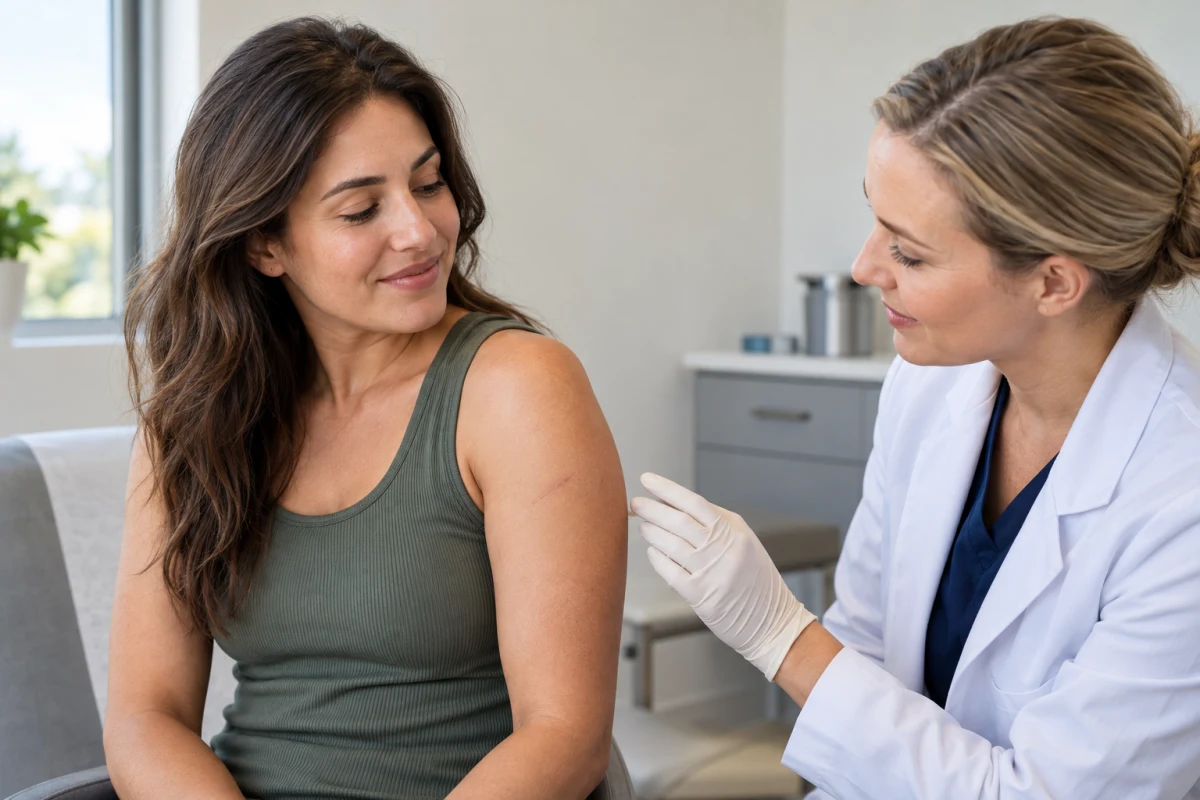
What determines a scar revision plan?
The scar’s size, location, characteristics and previous treatment help determine the approach. Revision may improve a scar, but it cannot promise to erase it.
Ask whether the proposal is for one procedure or a course of sessions, and whether the quoted amount covers the whole planned course. If photographs are used initially, clarify what still needs examination. The scar revision page and article on realistic scar revision expectations address the distinction between improvement and complete removal.
Does a check-up include someone explaining the results?
Only if that consultation is part of the stated service. Ask which clinician reviews the results, how you receive the explanation and whether a follow-up appointment is included.
A longer test list is not automatically more useful, and no package can guarantee that every condition will be found. Ask how the proposed tests relate to your age, history and concerns. Clarify what happens if a finding needs further tests or referral, including who explains the next step and whether that work is separate.
Travel, Complications and Booking Terms
Can I request a proposal without hotel accommodation?
If you are arranging your own stay, request a written offer for clinical services only. Check whether transfers, interpretation or other non-clinical services are also excluded before comparing it with a hotel-inclusive package.
Choosing your own hotel does not reduce a hospital stay considered necessary by the clinician. Consider access to reviews and practical needs after a procedure. Do not assume an advertised hotel amount will be fully deducted; providers may price services differently. Ask for the final total for the scope you want.

What might still be outside an “all-inclusive” package?
Unplanned tests, extra hospital nights, additional medicines, companion expenses, flight changes and a return visit may be outside the stated package. Ask which are excluded and which have simply not yet been confirmed.
Keep unresolved items in that third category instead of assuming they are covered. For a potentially additional clinical service, ask what would trigger it, who would explain the need and how its charge would be agreed. The three-status checklist helps turn those gaps into questions.
What should I clarify if a companion travels with me?
Confirm whether the room includes a companion and whether their meals, transfers and extra nights are covered. A room described as “included” may not identify its occupancy or the companion’s entitlement to other services.
Ask how your companion can help with the practical recovery plan and whether the accommodation is suitable for it. Their presence does not replace clinical support. Check how their booking changes if your admission or travel dates change, particularly when the companion has separate flights.
Who pays if a complication requires treatment or another operation?
Who pays depends on the provider’s written service terms and any insurance policy; do not assume complication treatment or another operation is included. Check exclusions for the planned treatment and ask how the terms apply if you need care after returning home.
Ask who assesses a concern, how urgent care is arranged and which costs might be yours. Urgent assessment should not wait while you and a provider dispute payment responsibility. The NHS advice on cosmetic surgery abroad highlights the need to plan follow-up; get the provider’s contingency arrangements in writing before booking.
What should be written down before I pay a deposit?
Deposit, cancellation and price-validity terms should be written down before payment. Check the total and currency, services included, payment schedule and conditions for changing or cancelling the booking.
Ask what happens to a deposit if assessment changes the plan, the provider advises against treatment or travel dates change. Confirm any refund, deduction or administration charge and who receives payment. Keep the original offer and any later revision together.
Can different specialties be considered for the same trip?
You can ask about appointments for different specialties on one trip, but each proposed treatment still needs its own assessment. A combined quotation is not confirmation that every procedure can safely be combined.
For scalp and beard restoration, ask how the teams would plan the shared donor supply. For dental care, clarify whether a final restoration needs a later visit that cannot fit the same trip. Name the provider responsible for each treatment, the review schedule and any conflicts between recovery requirements before relying on one itinerary.
If friends travel together, does everyone receive the same package?
No. Shared accommodation or transport does not make everyone’s treatment needs or quotations the same. Each person needs an individual assessment and a written offer for their own procedures.
Ask which shared services receive a group rate and what happens if one person postpones or changes their treatment. Keep personal consent and clinical discussions separate, even when organising practical arrangements together. A per-person total should distinguish individual treatment from the services the group shares.
What Happens After You Send an Enquiry?
You share your contact details, the service or concern you are researching and the questions you want answered. The form is a starting point; it does not commit you to a procedure.
- Your enquiry is received. Explain your priorities and whether a budget covers treatment alone or the whole trip.
- Sharing depends on your consent. Your enquiry may be forwarded to relevant independent healthcare providers or authorised medical tourism organisations.
- The relevant organisation contacts you directly. It explains what assessment is needed. Clinical recommendations come from the healthcare provider; any quotation, payment or service arrangement is agreed directly with the responsible organisation.
Just Clinic Istanbul is an independent marketing and lead generation platform, not a healthcare provider or medical tourism intermediary. It does not choose your treatment or arrange procedures, accommodation or transport. The About Us page explains the platform’s role and how enquiries are handled.
What should I tell Just Clinic Istanbul if I am still undecided?
Describe the concern or procedure you are researching, the questions you need answered and what your budget is intended to cover. It is fine to say that you have not chosen a technique or decided whether to have treatment.
Include practical preferences, such as arranging your own accommodation or wanting information about package options, without treating the budget as a clinical recommendation. You do not need to send a detailed medical file with the first message; the relevant provider should explain what information is needed for an assessment and how to share it.
Prepare Your Enquiry in Five Minutes
Use this first-message template to explain where you are in your research. Replace the brackets, keep the choices that fit and add your most important unanswered question. A budget is more useful when it says what the amount needs to cover.
The message does not itself grant consent to share your enquiry. Review the consent choices on the contact form when you decide to send it.
At this stage, you do not need to attach detailed health records. The relevant provider should explain which records or photographs are necessary for an assessment and how to share them.