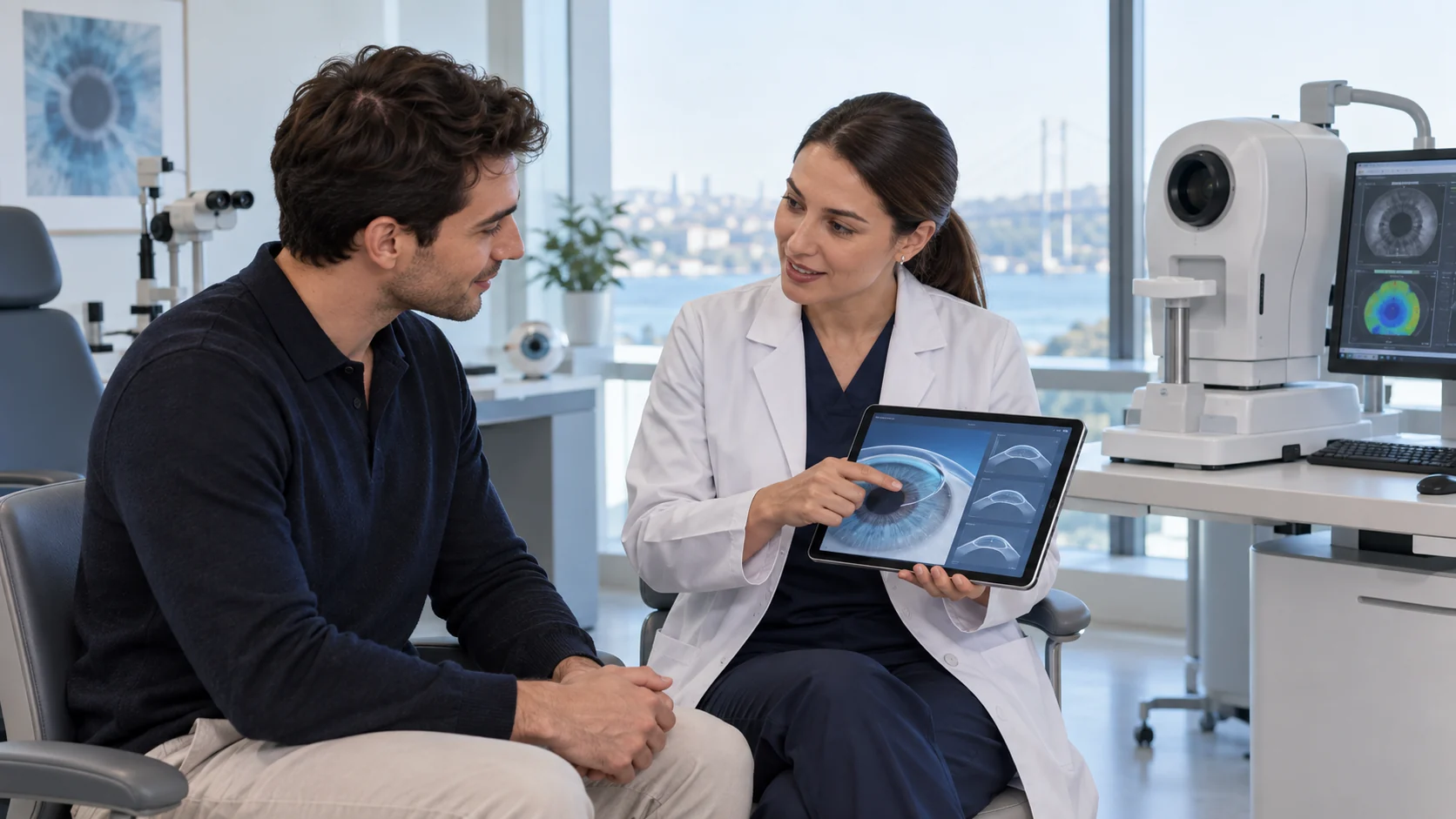
Laser eye surgery in Turkey may mean LASIK, PRK or TransPRK, SMILE, or a branded workflow such as iLASIK or “No-Touch”. The names describe different approaches, but candidacy depends on detailed eye measurements and health, not a marketing label or a glasses prescription alone. Compare the screening, clinician, device, recovery support and plan for follow-up before choosing a provider.
Which laser eye methods should I compare?
LASIK creates a corneal flap; PRK and TransPRK treat the corneal surface and require it to heal; SMILE removes a small lenticule through a small incision. “No-Touch” is used for some surface-treatment workflows, while iLASIK commonly names a LASIK pathway with particular planning and laser technologies. Ask exactly what will be done to your eye.
There is no universal winner. Read the linked guides to LASIK and PRK, iLASIK and TransPRK and SMILE, plus the SMILE versus LASIK comparison.
Is Turkey a reasonable option for laser eye surgery?
Turkey may be one option to compare if an ophthalmic team performs full screening, discloses the exact device, explains alternatives and provides accessible follow-up. A destination or laser brand does not establish candidacy; eye measurements and health do.
Ask who examines and operates, how you can get urgent eye assessment after return and what aftercare is included. The Royal College of Ophthalmologists patient information outlines options and discussion points.
What tests should be done before anyone says I am suitable?
A complete assessment should consider whether your prescription is stable, corneal shape and thickness, eye-surface and tear health, pupil size, eye history and other relevant health factors. A normal glasses prescription does not establish that corneal reshaping is suitable.
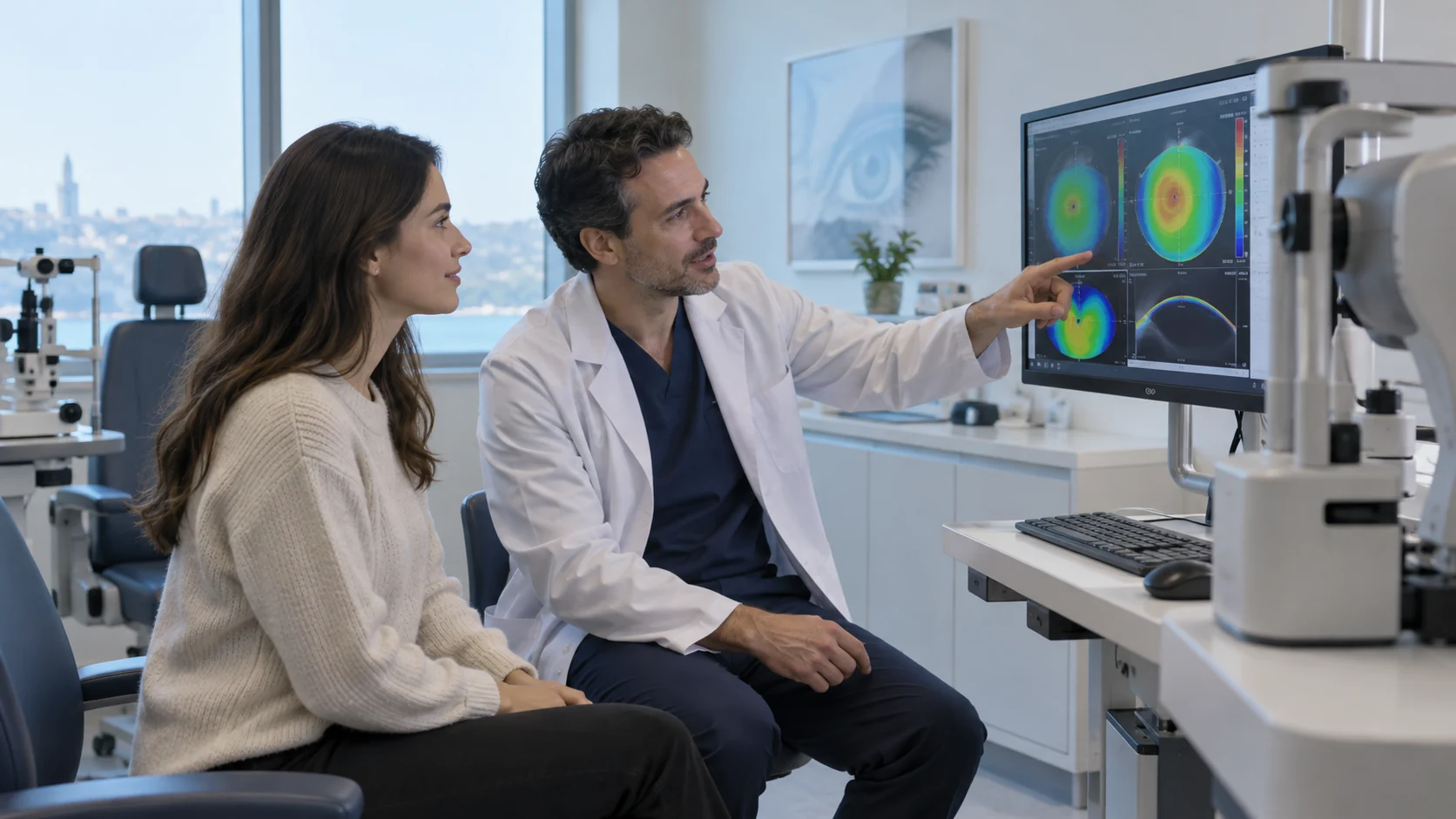
Ask what topography or tomography maps were taken, what the measurements show, whether contact lenses must be stopped before reliable measurements, and what findings could rule out treatment. The screening evidence guide explains why maps need clinical interpretation.
How do dry eye and corneal thickness affect the decision?
Existing dry eye may affect comfort and assessment, and LASIK can worsen dryness for some people. Corneal thickness and shape help determine how much tissue could be altered safely; a thin or irregular cornea may lead a clinician to recommend another method or no laser surgery.
The FDA’s LASIK checklist specifically asks patients to discuss dry eye, corneal thickness, stable refraction, risks and long-term care. Do not treat a claimed method advantage as proof that your own risk is low.
Is SMILE better than LASIK or PRK?
No method is best for everyone. SMILE, LASIK and surface procedures differ in how the cornea is treated and how early recovery feels; suitability depends on measurements, prescription, eye health and personal priorities. Ask why the proposed method fits your eyes and what alternatives were ruled out.
Read the practical guides to SMILE and LASIK differences and LASIK and PRK candidacy. Neither a brand label nor a package can decide suitability.
What should I know about halos, glare and night vision?
Glare, halos, starbursts or reduced night-vision comfort can occur after refractive surgery and may affect night driving. Risk varies; ask how your pupil measurements, prescription, corneal profile and chosen treatment affect the discussion. No provider should promise that such symptoms cannot happen.
Ask for the device-specific patient information and what symptoms need review. The FDA checklist covers these limitations and the possibility that vision correction may not remove the need for glasses permanently.
Which device, clinician and facility details matter?
Ask for the exact laser make and model, which procedure it will perform, who does the measurements and who operates, the clinician’s qualifications and experience with that method, and where the treatment occurs. Request relevant regulator status or device documentation for the actual country and platform; FDA clearance in one jurisdiction should not be assumed for every device abroad.
Ask whether the person who screens you is also responsible for treatment and post-operative review, what happens if the surgeon is unavailable, and what records you receive.
Should I choose a hospital or a specialist eye clinic?
Ask where examination, laser treatment and reviews take place, who is the responsible ophthalmologist and what urgent eye-care capability is available. A dedicated eye clinic may have equipment for refractive treatment; more complex health needs may require a different facility. The clinician should explain why the setting suits you.
Confirm device make and model, relevant regulatory status, staff roles and a route for urgent assessment.
What are the best laser eye clinics and hospitals in Turkey?
There is no universal best clinic for every prescription or cornea. Compare the ophthalmologist, screening measurements, exact laser system, method-specific experience, consent, review access and emergency plan.
Check recent reviews mentioning the same procedure and later follow-up, and how complaints or unexpected vision changes were handled. Reviews can inform communication questions but cannot prove a clinical result or rank a provider.
What changes the price and package scope?
Price may vary with method, whether one or both eyes are treated, pre-operative tests, medication, protective items, reviews and any enhancement policy. These planning ranges do not specify whether one or both eyes are included; get that scope in writing.
Review the current references and written inclusions below.
Swipe across the table to compare every column.
| Guide and procedure | Planning range | Scope to compare |
|---|---|---|
| Laser Eye Surgery (LASIK/PRK) | €2,000–€2,800 | Published guide range; the source does not define one-eye versus both-eye scope. Confirm eye count and stages in writing. |
| iLASIK, TransPRK and No-Touch Laser Eye Surgery | €2,200–€3,000 | Published guide range; the source does not define one-eye versus both-eye scope. Confirm eye count and stages in writing. |
| SMILE Laser Eye Surgery | €2,400–€3,200 | Published guide range; the source does not define one-eye versus both-eye scope. Confirm eye count and stages in writing. |
These figures come from the current linked Just Clinic guides. They are planning references, not individual provider quotations, quality scores or a combined branch average. Compare the same clinical stages and written inclusions; accommodation and transfers belong in the quote only when expressly included by the independent provider.
Swipe across the table to compare every column.
| Provider profile | Planning reference | What a difference might reflect |
|---|---|---|
| Premium hospital setting | The upper end of the specific procedure’s own range — an upper-range budget scenario | Facility resources, named team, device or implant, clinical complexity and documented follow-up; confirm each item. |
| Established private hospital or specialist clinic | Compare within the same procedure and stage; no branch-wide midpoint | A different service scope or operating model; price does not establish clinician experience or suitability. |
| Value-focused provider | The lower end of the same procedure’s own range — a lower-range budget scenario | Lean service scope, travel exclusions or other commercial differences; check clinical responsibility and extra costs. |
The procedures in this branch do not share one clinically meaningful price range. Apply these budgeting scenarios separately to each relevant procedure; do not average different operations, devices, eyes, jaws or treatment stages.
These are comparison scenarios, not evidence that a particular provider type charges a particular amount. A higher price does not guarantee a better result, and a lower price does not automatically indicate lower medical quality.
How do treatment-only fees differ from laser packages?
A treatment fee may cover a procedure only; a package may include defined tests, medicines or reviews. Ask whether the quote covers one or both eyes, names the laser, includes screening and checks, and explains any enhancement policy.
Compare the linked SMILE price guide and SMILE package. These planning ranges do not specify whether one or both eyes are included; get that scope in writing.
How long does recovery take and when can I travel?
Early recovery differs: surface procedures often involve more discomfort and slower visual recovery while the surface heals, whereas LASIK and SMILE have different restrictions and review needs. The treating eye-care team should set your own timetable for drops, screens, work, exercise, driving and flying after examining you.
Before travel, confirm the planned review, urgent contact method and whether any symptoms would delay a return journey. Do not use another patient’s timeline as clearance to fly or drive.
What aftercare should be available after I return home?
Ask who reviews your eyes after treatment, how long the treating service remains responsible, how your local optometrist or ophthalmologist can access records and what happens if dry eye, pain, blurred vision or a visual symptom develops. Agree who pays for extra visits or enhancement and what conditions apply.
Sudden vision loss, severe pain, marked redness or rapidly worsening symptoms need urgent eye assessment. Have a local route for urgent care and do not wait for a remote reply. Confirm travel and aftercare against the FCDO guidance.
How should I compare clinics and hospitals?
Compare the screening depth, clinician involvement, device disclosure, consent discussion, written risks, follow-up access and emergency plan. Ask whether declining surgery is an accepted outcome of assessment. A responsible service explains who is not suitable and why.
Use the hospitals and healthcare providers directory as a starting point for a provider shortlist. Confirm which named clinician and facility provide the specific service and how the proposed plan is delivered.
What should go on a shortlist?
Ask every provider the same questions: What measurements support candidacy? Which procedure and exact laser are proposed? Who examines and operates? What risks apply to my eyes? How many reviews are included? Who handles urgent symptoms and later care at home? Is the price for one eye or both?
Compare written answers with your priorities, such as sport, contact lenses, night driving or tolerance for slower surface healing. A second opinion is reasonable if explanations differ.
What is Just Clinic Istanbul’s role?
Just Clinic Istanbul is an independent marketing and lead-generation platform, not a healthcare provider or medical tourism intermediary. Enquiries may be shared with authorised healthcare partners with your consent. We can help identify and compare available options according to the treatment being researched, expected service level and budget. Independent providers decide clinical suitability and treatment.
Where can I read more before comparing methods?
Use the eye-surgery price guides to distinguish LASIK/PRK, iLASIK/TransPRK and SMILE. Read the screening research and method comparison, then review the patient guides to iLASIK and No-Touch terminology and SMILE and dry eye.