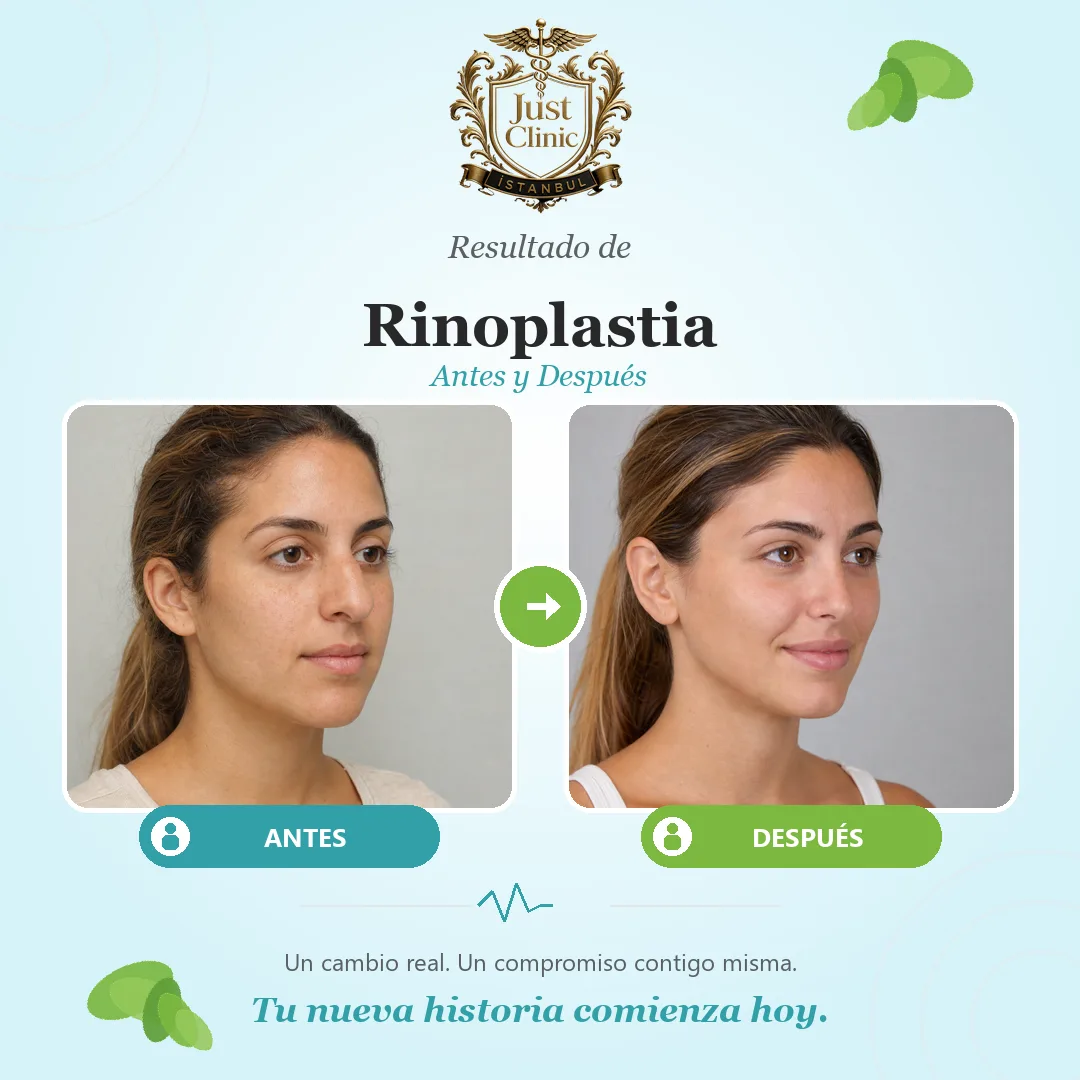
Rhinoplasty Turkey recovery is what most UK patients research before booking a nose job abroad. This guide explains how surgery works, a week-by-week healing timeline, post-operative care, travel planning for Istanbul, and realistic before-and-after expectations — without turning the article into a price landing page.
What rhinoplasty addresses and how surgery is performed
Rhinoplasty reshapes the bony and cartilaginous framework of the nose to improve appearance, facial balance, or — when needed — nasal airflow. Aesthetic goals may include refining a dorsal hump, straightening the bridge, adjusting tip projection or width, or correcting alar base asymmetry. If a deviated septum or collapsed valves affect breathing, septorhinoplasty may be combined in the same operation.
Surgery is usually performed under general anaesthesia, though local anaesthesia with sedation is occasionally used for minor cases. Operating time typically ranges from one to three hours depending on complexity. Reshaping may involve osteotomies, cartilage sculpting or suturing, and autologous grafts when structural support is required. The aim is a balanced result that respects your ethnicity, skin thickness, and anatomical limits — not a copied celebrity profile.
Open, closed and ultrasonic techniques
Closed rhinoplasty uses internal incisions only, with no visible external scar. Open rhinoplasty adds a small columellar incision to lift the tip and improve visibility; it is often chosen for tip work, marked asymmetry, or revision cases. Ultrasonic (piezo) rhinoplasty uses high-frequency vibrations to reshape bone with less soft-tissue trauma, which may reduce early swelling for many patients. No single technique is universally best — your surgeon should explain why a specific approach fits your anatomy.
Rhinoplasty recovery in Turkey: week-by-week timeline
Understanding each phase helps you interpret swelling without mistaking it for a poor early outcome. Recovery continues long after the splint is removed.
Days 1–3: immediate post-operative phase
The first two or three days often bring the most swelling and periorbital bruising, which typically shifts from purple to yellow-green. Nasal congestion, facial pressure, and numbness around the tip or upper lip are common. Rest with your head elevated, take prescribed medication, and avoid bending or straining. Most international patients stay in hospital observation briefly, then return to hotel accommodation with a coordinator contact number.
Days 4–7: splint phase and first review
Bruising usually begins to fade. The external splint protects the new nasal structure; do not get it wet unless your team instructs otherwise. Saline rinses or sprays may be recommended to keep the nasal passages clear. A face-to-face review is typically scheduled before splint removal. Plan to remain in Istanbul during this period — flying before medical clearance is unsafe.
Days 7–10: splint removal and fit-to-fly assessment
The splint is commonly removed between days seven and ten. The nose still looks swollen and may appear wider or higher than expected; this is normal, not the final result. Many surgeons allow short-haul flights from day seven to ten if healing is uncomplicated, but rhinoplasty flying home to the UK should only happen after explicit written clearance. Long-haul travel, heavy luggage, and cabin pressure changes require individual assessment.
Weeks 2–4: returning to daily life
Most visible bruising fades within two to three weeks. Many people return to desk work or university around weeks two to three, often with makeup to conceal residual discolouration. Avoid contact sports, heavy gym sessions, and activities that risk nasal trauma. Glasses should not rest on the bridge for several weeks; your surgeon may suggest taping them to the forehead temporarily.
Months 1–3: early refinement
Swelling reduces progressively, though the tip — especially with thick skin — can remain puffy. A representative profile is often visible around three months, but refinement continues. Sun protection on the nasal skin is important; UV exposure can darken healing tissue and affect scar appearance.
Months 6–12: final settling
Structural and soft-tissue settling may take nine to twelve months, or longer in complex or revision cases. The tip is usually the last area to refine fully. Patience and scheduled reviews — including remote photo follow-up after you return to the UK — are part of the process.
Post-operative care and risks after nose surgery
Rhinoplasty Turkey recovery depends on following instructions consistently. Essential care includes sleeping with head elevation, avoiding nose blowing for several weeks, gentle saline irrigation as directed, and not picking crusts inside the nostrils. Smoking and vaping impair healing and increase complication risk; most surgeons advise stopping before surgery.
Possible complications — uncommon but documented — include bleeding, infection, persistent asymmetry, breathing difficulty, or dissatisfaction with aesthetic outcome. Revision surgery is sometimes considered after full healing, not in the first weeks. Contact your medical team promptly if you develop high fever, severe unilateral pain, spreading redness, or sudden breathing deterioration.
Rhinoplasty before and after Turkey: what to expect at each stage
Clinical before-and-after photos show mature results, typically taken six to twelve months post-operatively. Comparing your mirror reflection at day seven with those images creates unrealistic disappointment. Dorsal swelling resolves faster than tip swelling; thick skin may mask early tip definition for months.
During consultation, ask to see cases with similar skin type, ethnicity, and goals to yours. Digital morphing can help communication but does not guarantee identical outcomes. Nose job before and after Turkey galleries should illustrate progression, not promise a specific celebrity shape.
How many days to stay in Istanbul after rhinoplasty
Most UK patients plan seven to ten nights in Istanbul: arrival and pre-operative assessment, surgery day, splint removal review, and medical clearance before the return flight. Shorter stays may be possible for minor procedures but should not compromise safety. Build buffer days for delayed healing or flight changes.
- Arrive at least one day before surgery for final assessment and fasting instructions
- Confirm hotel proximity to clinic and 24-hour coordinator contact
- Arrange a travel companion for the first post-operative night if recommended
- Request written aftercare instructions and emergency numbers before flying home
- Book flexible return flights until fit-to-fly is confirmed
Planning your trip and choosing a surgeon in Istanbul
Istanbul offers accredited hospitals, experienced facial surgeons, and established medical-travel pathways for UK patients. Due diligence still matters: verify hospital accreditation, rhinoplasty-specific experience, emergency protocols, and English-speaking coordination.
For structured information about the procedure, see our rhinoplasty in Istanbul page. Many UK patients also compare overall trip costs; for orientative ranges and variables affecting your quote, see our rhinoplasty Turkey cost guide — without duplicating full price tables here.
At Just Clinic Istanbul rhinoplasty, planning begins with individual consultation: photos, realistic goals, and contraindications are reviewed before any itinerary is proposed. Our coordination team handles transfers, appointments, and clinic communication so you can focus on preparation and recovery.
Choosing surgery abroad deserves time. Compare assessments, ask why a specific technique is recommended, and leave Istanbul with written instructions for your GP or local ENT if needed. When you work with Just Clinic Istanbul rhinoplasty, we prioritise centres with recognised safety standards and direct English support — without promising outcomes no ethical professional can guarantee.
Revision rhinoplasty considerations for UK patients
Primary rhinoplasty recovery principles apply to revision cases but timelines may extend — scar tissue and prior structural changes slow refinement. Revision patients should allow longer Istanbul stay and conservative flight timing. Prior operative notes help Istanbul surgeons plan safely.
Allergies, asthma and nasal breathing
Seasonal allergy flares during recovery worsen congestion sensation — antihistamines only if surgeon approves. Functional septorhinoplasty may improve airflow but internal swelling temporarily blocks breathing early weeks regardless.
Nutrition and hydration supporting healing
Protein-rich diet, adequate hydration, and avoiding alcohol first weeks support tissue repair. Vitamin C alone does not guarantee faster healing; balanced nutrition and sleep matter more than supplement stacks promoted online.
Practical questions UK patients ask before booking
Insurance rarely covers cosmetic surgery abroad — budget for complications fund and possible extended stay. EHIC/GHIC does not replace private surgical coverage in Turkey. Travel insurance declaring cosmetic procedure is essential; standard holiday policies often exclude elective surgery claims. Keep credit card unblocked for hospital deposits if required on admission day.
Language access matters at 2 a.m. if nausea or anxiety spikes — confirm twenty-four-hour English coordinator availability in writing, not only weekday office hours. Save clinic GPS address in phone for taxi drivers. Download offline maps of hotel-to-clinic route.
Companion vs solo travel
Solo travel is possible for many procedures with hotel nursing add-ons, but first-night assistance after general anaesthesia strongly favours a companion or paid carer. Airport wheelchair request reduces fatigue even if you can walk — energy reserves matter for healing not heroics.
Document checklist for border and aftercare
- Passport, flight confirmations, hotel booking, clinic appointment schedule
- Printed operative consent copies and allergy list
- GP letter listing regular medications
- Emergency contact tree: coordinator, surgeon office, hotel front desk
- Photograph incisions only if surgeon requests telemedicine review — date-stamp images
Realistic recovery beats rushing home to impress employers or social media followers. The clinics that encourage extended stay when healing lags are prioritising safety over bed turnover — that culture sign matters when choosing where to book.
Setting expectations with your employer and family
Discuss anticipated absence length with HR using medical certificate from Istanbul discharge — not guessed dates from forums. Family members should understand lifting restrictions: toddlers, shopping bags, and laundry baskets often exceed post-op limits silently assumed at home. Meal prep and childcare rosters before departure reduce relapse into overactivity that triggers complications.
When online forums disagree with your surgeon
Reddit and TikTok recovery timelines are anecdotal. Your surgeon's protocol reflects your operative extent, comorbidities, and intraoperative findings — follow personalised instructions over generic week-by-week posts from strangers with different anatomy and procedures.