Hair transplant Turkey recovery follows a predictable timeline from scab shedding to new growth — but patience is essential. UK patients researching FUE or DHI in Istanbul need wash protocols, shock loss explanation, and realistic growth milestones.
FUE vs DHI: technique guide
FUE (follicular unit extraction) harvests individual grafts via micro-punches from the donor strip at back/sides of scalp, then implants into recipient zone. DHI uses a Choi implanter pen to place grafts directly, sometimes allowing unshaven options in selected cases. Neither guarantees unlimited density — donor reserve and scalp laxity set limits.
Graft count planning and natural hairline design precede surgery. Ethical clinics count grafts transparently and avoid over-harvesting donor area.
Sapphire FUE and 3000-graft pricing context
Sapphire FUE Turkey uses sapphire blades for recipient micro-incisions — a variant some UK clinics highlight for angle control and healing comfort. Quotes often reference bands such as a 3000 grafts hair transplant Turkey package, but your actual count depends on Norwood stage, donor density and hairline goals — not a fixed marketing tier alone. For orientative per-graft and package ranges vs UK private fees, see our hair transplant Turkey cost page.
Hair transplant recovery timeline
Days 1–3
Recipient and donor areas show tiny scabs and redness. Sleep elevated; avoid touching grafts. Pain usually mild. First night rest critical — no helmet, hat friction, or pillow rubbing graft zone.
Days 4–14: washing protocol
Supervised first wash typically day two or three. Gentle shampoo application without rubbing — patting and prescribed lotion technique. Scabs shed gradually days eight to fourteen. No swimming, gym, or direct sun until cleared.
Weeks 2–8: shock loss
Shock loss — transplanted hairs shedding while follicle remains — is expected, not failure. Can look temporarily thinner before regrowth phase.
Months 3–18: growth phases
Visible new hair often starts months three to six. Density and calibre mature twelve to eighteen months. Donor scar dots fade; FUE leaves dispersed tiny scars hidden by surrounding hair.
Hair transplant medical tourism from the UK
Plan three to seven nights in Istanbul for procedure, first washes, and review. Some clinics offer remote wash guidance after return. Coordinate with UK GP or dermatologist for long-term hair health if needed.
Post-operative care and risks
Risks include infection, poor growth in over-harvested donor, unnatural hairline, and scarring. Avoid alcohol and smoking pre-op. Report spreading redness or fever promptly.
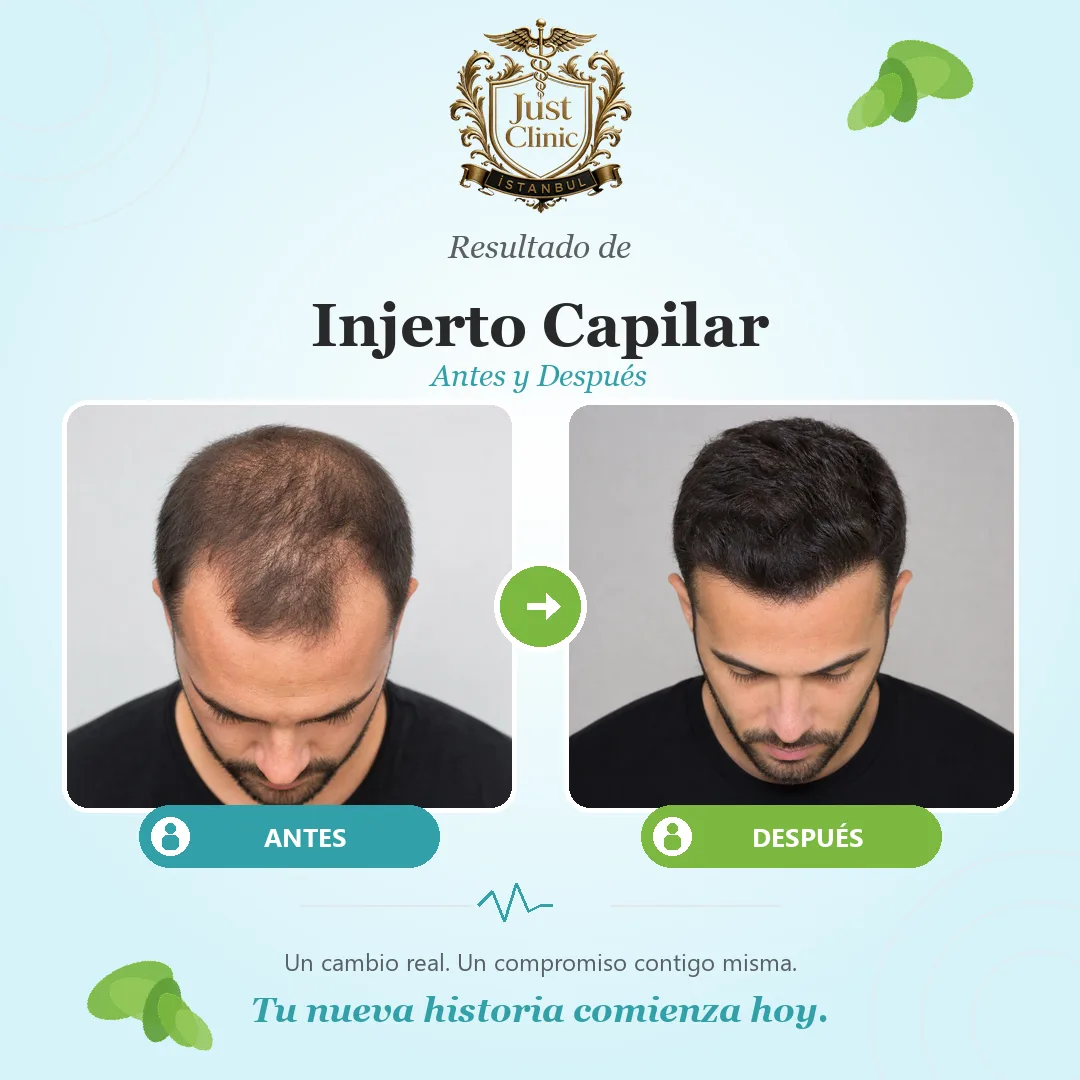
Hair transplant before and after Turkey
Compare mature photos at twelve months, not week two. Hair calibre and curl affect apparent density. Second session may be discussed if donor allows and goals require.
Choosing hair transplant in Istanbul
See hair transplant in Istanbul. Orientative pricing: hair transplant Turkey cost.
Donor area healing and shaving options
FUE leaves dotted scars hidden by surrounding hair. Partial unshaven FUE or DHI may suit selected UK patients wanting discretion on return to work — confirm availability pre-booking.
Month-by-month hair growth expectations
Month 1: Scabs gone; redness fading.
Months 2–3: Shock loss phase.
Months 4–6: Fine new hairs emerge.
Months 9–18: Density matures.
UK workplace return after hair transplant
Many return within days to a week if hat policy allows or donor zone concealable. Recipient redness may suggest waiting ten to fourteen days for client-facing roles.
Just Clinic Istanbul hair transplant coordinates surgeon vetting and wash-protocol training. Just Clinic Istanbul hair transplant patients leave with written day-by-day care instructions for home.
Graft count realism and donor management
Clinics advertising unlimited grafts should be scrutinised — over-harvesting creates moth-eaten donor appearance. Ethical planning leaves reserve for future loss progression. Hairline design conservatively mature for age; overly low adolescent hairlines look unnatural decades later.
PRP and adjunct therapies
Platelet-rich plasma or mesotherapy may be offered as add-ons — evidence varies. Clarify cost inclusion and whether adjuncts are optional. They do not replace fundamental FUE/DHI surgical skill.
Post-transplant UK lifestyle
Delay hats that rub grafts; avoid saunas and steam rooms for weeks. Swimming pools and gym hot desks wait for clearance. Sun protection on recipient zone prevents pigmentation issues during healing months.
Practical questions UK patients ask before booking
Insurance rarely covers cosmetic surgery abroad — budget for complications fund and possible extended stay. EHIC/GHIC does not replace private surgical coverage in Turkey. Travel insurance declaring cosmetic procedure is essential; standard holiday policies often exclude elective surgery claims. Keep credit card unblocked for hospital deposits if required on admission day.
Language access matters at 2 a.m. if nausea or anxiety spikes — confirm twenty-four-hour English coordinator availability in writing, not only weekday office hours. Save clinic GPS address in phone for taxi drivers. Download offline maps of hotel-to-clinic route.
Companion vs solo travel
Solo travel is possible for many procedures with hotel nursing add-ons, but first-night assistance after general anaesthesia strongly favours a companion or paid carer. Airport wheelchair request reduces fatigue even if you can walk — energy reserves matter for healing not heroics.
Document checklist for border and aftercare
- Passport, flight confirmations, hotel booking, clinic appointment schedule
- Printed operative consent copies and allergy list
- GP letter listing regular medications
- Emergency contact tree: coordinator, surgeon office, hotel front desk
- Photograph incisions only if surgeon requests telemedicine review — date-stamp images
Realistic recovery beats rushing home to impress employers or social media followers. The clinics that encourage extended stay when healing lags are prioritising safety over bed turnover — that culture sign matters when choosing where to book.
Setting expectations with your employer and family
Discuss anticipated absence length with HR using medical certificate from Istanbul discharge — not guessed dates from forums. Family members should understand lifting restrictions: toddlers, shopping bags, and laundry baskets often exceed post-op limits silently assumed at home. Meal prep and childcare rosters before departure reduce relapse into overactivity that triggers complications.
When online forums disagree with your surgeon
Reddit and TikTok recovery timelines are anecdotal. Your surgeon's protocol reflects your operative extent, comorbidities, and intraoperative findings — follow personalised instructions over generic week-by-week posts from strangers with different anatomy and procedures.
Closing notes on safe medical travel from the UK
Elective surgery abroad combines healthcare with travel logistics — treat both seriously. Arrive rested, not straight off a night flight into pre-op assessment. Hydrate on aircraft, wear compression stockings if your UK GP recommends DVT prophylaxis for your risk profile, and walk the cabin aisle hourly on return when medically cleared to fly. Keep digital and paper copies of consent forms.
Healing continues long after social-media-ready moments pass. Schedule follow-ups before departure, not only after problems appear. A structured plan from day zero reduces panic-driven decisions mid-recovery.
Recording your recovery for remote review
Many Istanbul teams request dated photos at fixed angles — front, oblique, profile as applicable. Consistent lighting and distance help surgeons compare progress. Do not edit or filter images sent for medical assessment. Honest documentation speeds useful advice if asymmetry or delayed healing appears after you land in the UK.
Red flags vs normal recovery sensations
Normal recovery includes discomfort managed by prescribed medication, predictable swelling, and gradual improvement week by week. Red flags requiring urgent contact include fever above thirty-eight degrees Celsius persisting, one-sided pain or swelling disproportionate to the other side, wound edges separating with odour, chest pain or breathlessness, or sudden vision change when relevant to facial procedures. When uncertain, photograph the concern and message your coordinator before assuming forum advice applies.
UK NHS 111 or A&E remain available for emergencies after return — bring Istanbul discharge summary to local clinicians. Cooperation between overseas surgical team and UK doctors improves continuity though ultimate responsibility follows the original treating surgeon's aftercare window.
Building a realistic Istanbul itinerary around recovery
Many UK patients combine light tourism before surgery but not during early recovery — plan sightseeing pre-op if desired, not post-op when rest and appointment attendance matter. Choose hotel distance to clinic wisely; traffic in Istanbul can consume recovery energy. Pre-order pharmacy items your coordinator lists so first nights are not spent searching unfamiliar streets.
Currency and payment: confirm whether deposit is GBP, EUR, or TRY and what card fees apply. Keep surgical quote email thread accessible for disputes on included nights or nursing hours. Transparency before payment prevents stress during healing when you are least able to negotiate.
Final reminder on individual medical advice
This guide educates UK searchers about typical recovery patterns; it does not replace personalised instructions from your treating surgeon. Protocols differ by technique, anatomy, and intraoperative findings. When written guidance conflicts with a generic article, always follow your surgeon's document.
Coordination with Just Clinic Istanbul
Medical travel works best when consultation, hospital booking, hotel proximity, and discharge instructions align before you fly from the UK. A coordinator who speaks fluent English and responds outside business hours reduces anxiety during the first nights when swelling and fatigue peak. Ask whether your package includes airport pickup, revision appointment slots if healing requires extra days, and a direct surgeon messaging channel for clinical questions rather than only sales staff.
Compare clinics on aftercare infrastructure, not only gallery photographs. Structured recovery guidance — written, dated, and procedure-specific — separates serious medical travel providers from volume operators treating blogs and patients as interchangeable funnels.
Allow extra hotel nights in your budget if surgeons recommend extended stay — changing flights last-minute costs more than one precautionary recovery day in Istanbul.
Allow extra hotel nights in your budget if surgeons recommend extended stay — changing flights last-minute costs more than one precautionary recovery day in Istanbul.
Allow extra hotel nights in your budget if surgeons recommend extended stay — changing flights last-minute costs more than one precautionary recovery day in Istanbul.
Allow extra hotel nights in your budget if surgeons recommend extended stay — changing flights last-minute costs more than one precautionary recovery day in Istanbul.