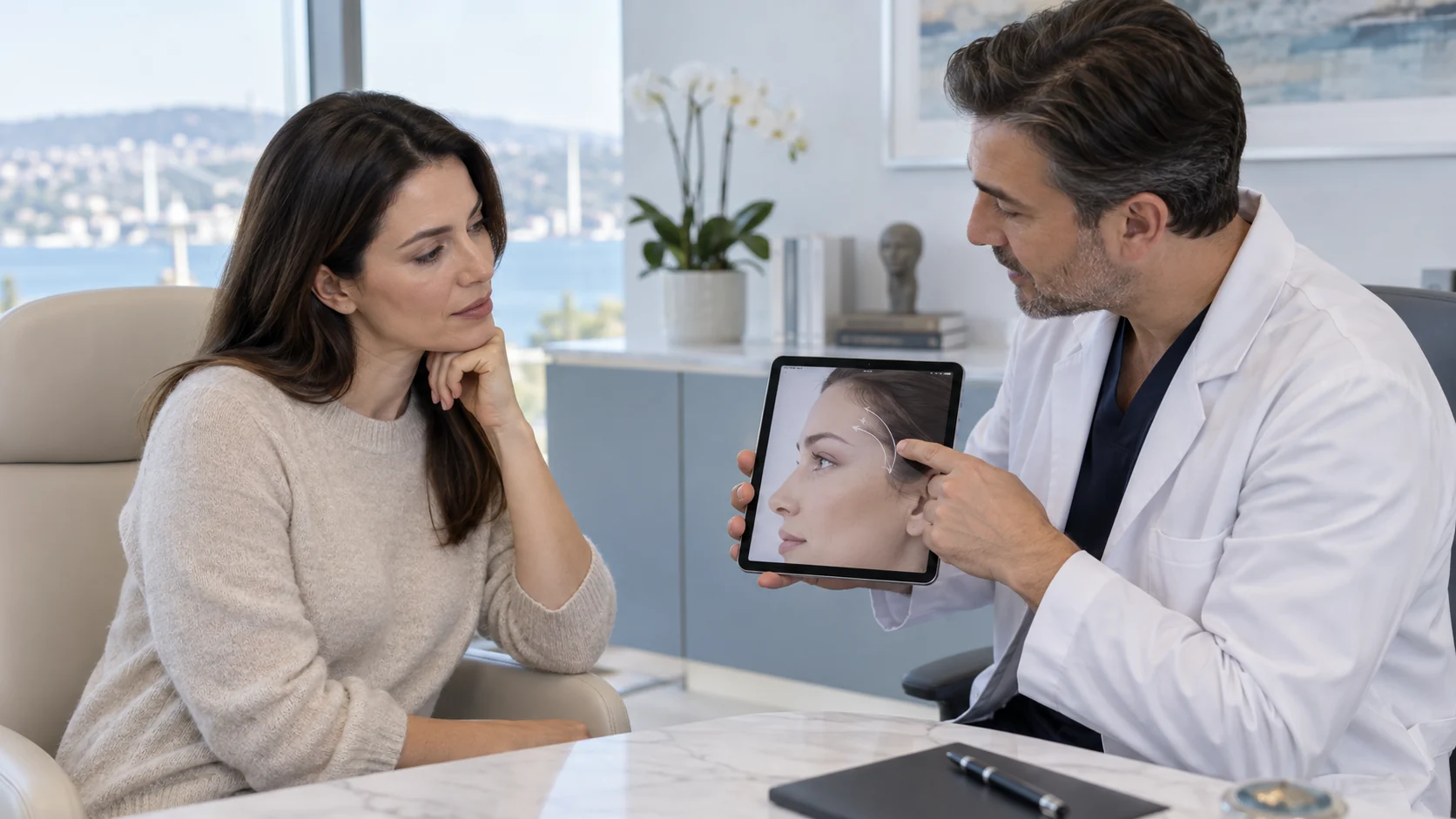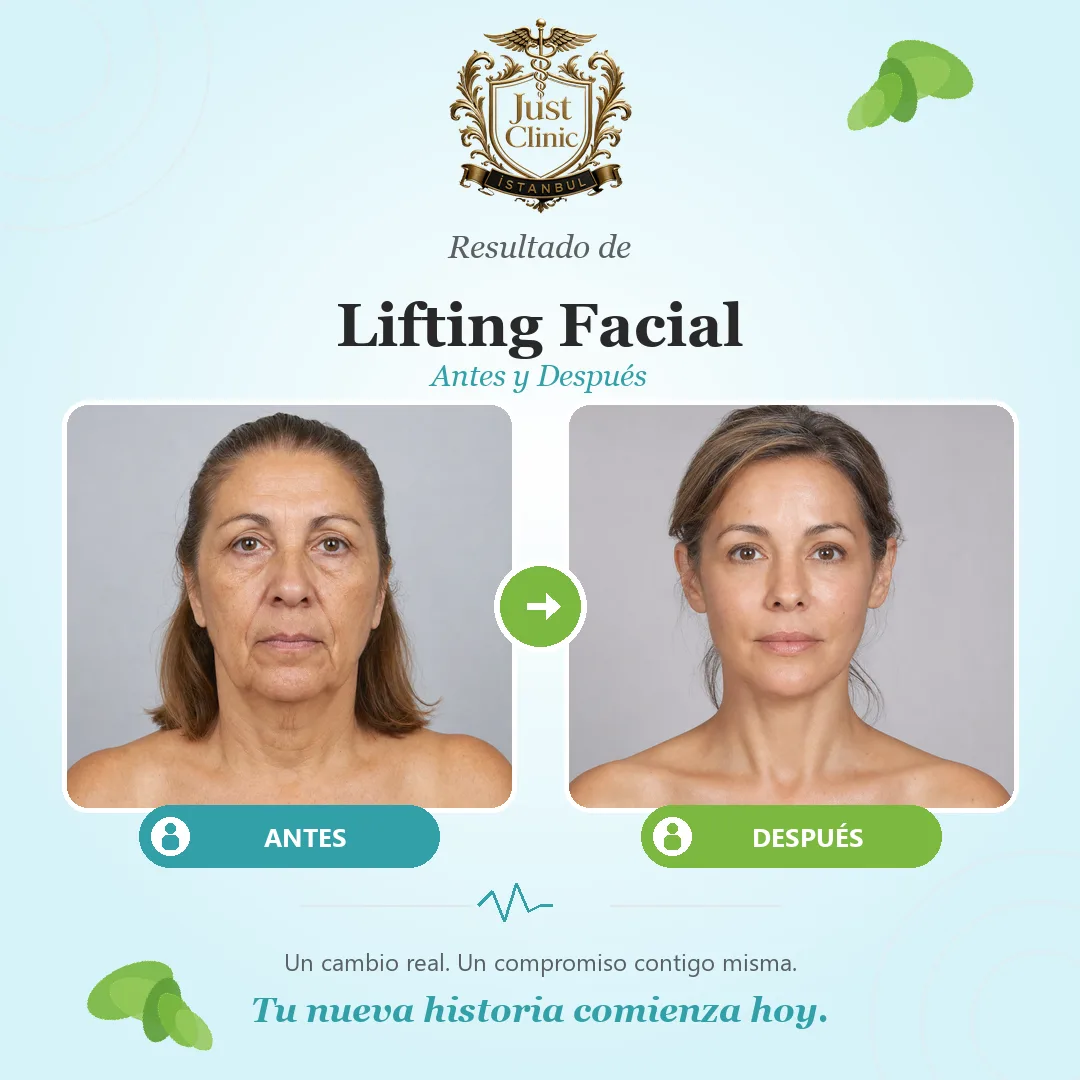





Facial fat transfer, also called facial lipofilling or facial fat grafting, uses fat taken from one area of the body and placed into selected facial areas. It involves two treatment sites: the donor area and the face. It is not the same as a dermal-filler appointment, and it should not be presented as a guaranteed permanent-volume procedure.
What does facial fat transfer treat?
Facial fat transfer may be discussed for volume loss in areas such as the temples, cheeks, tear-trough transition, jawline shadow, nasolabial region or selected contour irregularities. A direct answer is that it adds volume; it does not automatically lift loose skin, erase all wrinkles or replace a facelift, eyelid procedure or skin treatment.
The consultation should identify the exact area of concern. "My face looks tired" is too broad for a surgical plan. Ask whether the issue is volume loss, skin laxity, pigmentation, under-eye anatomy, bone structure, previous filler, weight change or a combination. A good plan may recommend less fat than you expected, or no fat transfer at all.
How much transferred fat survives?
Retention varies by person, area, technique and healing. Published studies report wide variation, and no responsible clinician should promise a fixed percentage for your individual face. A direct answer is that some transferred fat can be reabsorbed while some may remain longer term, but the final amount cannot be guaranteed before healing.
This uncertainty affects planning. Surgeons may account for expected resorption, but overfilling to chase a number can create swelling anxiety, lumpiness or an overdone look. Ask how the clinician balances under-correction and overcorrection, and when they judge the result mature enough to discuss any second stage.
Is facial fat transfer permanent?
The fat that successfully establishes a blood supply may last, but the face continues to age and body weight can still change facial volume. A direct answer is that facial fat transfer can be longer lasting than temporary filler in selected cases, but it is not a guarantee of permanent, unchanged volume.
If you gain or lose significant weight after surgery, transferred fat and the surrounding face may change. Ageing, skin quality, smoking, medical conditions and prior facial procedures can also influence healing and appearance. Ask what factors in your history could make retention less predictable.
How is the donor area planned?
Fat has to be harvested from somewhere, often through small liposuction-type access points. A direct answer is that the donor area is part of the operation, not a minor detail. It can bruise, swell, feel sore, need compression in some cases and have small scars or contour irregularities.
Ask where the fat will be taken from, why that area is chosen, whether enough fat is available, whether the quote includes donor-area care, and what restrictions apply to exercise, bathing, compression and travel. Do not assume that donor-area liposuction is a body-contouring procedure unless it is explicitly planned and consented as such.
What is swelling like after facial fat transfer?
Early swelling can make the face look too full, uneven or unfamiliar. A direct answer is that the first weeks are not the final result. Bruising and swelling can occur in both the face and donor area, and the face may settle unevenly before it looks balanced.
This is emotionally important. Patients may panic that too much fat was added, then later worry that too much disappeared. Ask for a realistic swelling timeline, when photos are useful for review, and which signs are not normal, such as worsening one-sided pain, redness, fever, skin colour change, visual symptoms or increasing firmness.
Can facial fat transfer be uneven?
Yes. Asymmetry, irregularity, lumps, nodules, cysts, under-correction, overcorrection and uneven absorption are possible. A direct answer is that some early unevenness may be swelling, but persistent irregularity needs clinical review. You should not massage, press or heat treated areas unless the treating clinician instructs you to do so.
Ask how fat is placed in small amounts, which facial planes are used, and how vascular risk is reduced. Any injection procedure in the face requires careful technique because blood vessels and nerves matter. Consent should include not only aesthetic risks but also urgent warning signs.
Is fat transfer better than dermal filler?
Neither option is automatically better. A direct answer is that fat transfer uses your own tissue and includes harvesting, processing and injection, while dermal fillers use manufactured materials and have different reversibility, maintenance and risk profiles. The better option depends on the area, desired amount, skin quality, budget, downtime and tolerance for uncertainty.
For small refinements, a clinician might discuss non-surgical options. For broader volume restoration, fat transfer may be considered. If you already have filler, tell the clinician where, when and what product was used, because old filler can change assessment and planning.
Can I fly after facial fat transfer?
You should fly only after the treating team has reviewed both your face and donor area. A direct answer is that travel timing depends on swelling, bruising, pain control, wound condition, compression needs, medicines and whether any other surgery was performed. The donor area can be the reason to delay travel even if the face looks acceptable.
Before booking, ask when the first review happens, whether compression is needed during travel, what movement is advised during the flight, what symptoms require urgent care, and who responds if swelling or asymmetry worries you after you return home.
What should a written plan include? The written plan should list donor area, facial target areas, anaesthesia, facility, responsible clinician, preoperative tests, medicines, compression or dressings, review schedule, exclusions, touch-up policy and urgent-contact route. It should not promise a fixed retention percentage, a perfectly smooth contour or a single-session final result.
Ask whether a second session is sometimes discussed, when it would be considered and whether it is included or separately priced. Also ask how the clinician handles dissatisfaction when the issue is limited retention rather than a technical complication. Clear wording now prevents pressure later.
If accommodation, transfers, translation support or postoperative garments are mentioned, the plan should say whether they are included or only optional support. That keeps the medical scope separate from travel logistics and helps patients compare written answers more fairly.
It should also state whether previous filler needs dissolving or imaging review before treatment.
How Just Clinic Istanbul fits into the enquiry
Just Clinic Istanbul is an independent marketing and lead generation platform, not a healthcare provider or medical tourism intermediary. Enquiries may be shared with authorised healthcare partners with your consent. It can help you request an itemised written response from authorised healthcare partners, but it cannot examine your anatomy, perform injections, prescribe donor-area care or guarantee fat retention.
Related guides: Price guide: Facial fat transfer cost in Turkey September 2026