
Buttock implants in Istanbul
Buttock implants offer permanent gluteal augmentation when fat transfer is not possible or not preferred. At Just Clinic Istanbul, body contouring surgeons guide UK patients through implant options, recovery planning and English-speaking coordination from first consultation to follow-up at home.
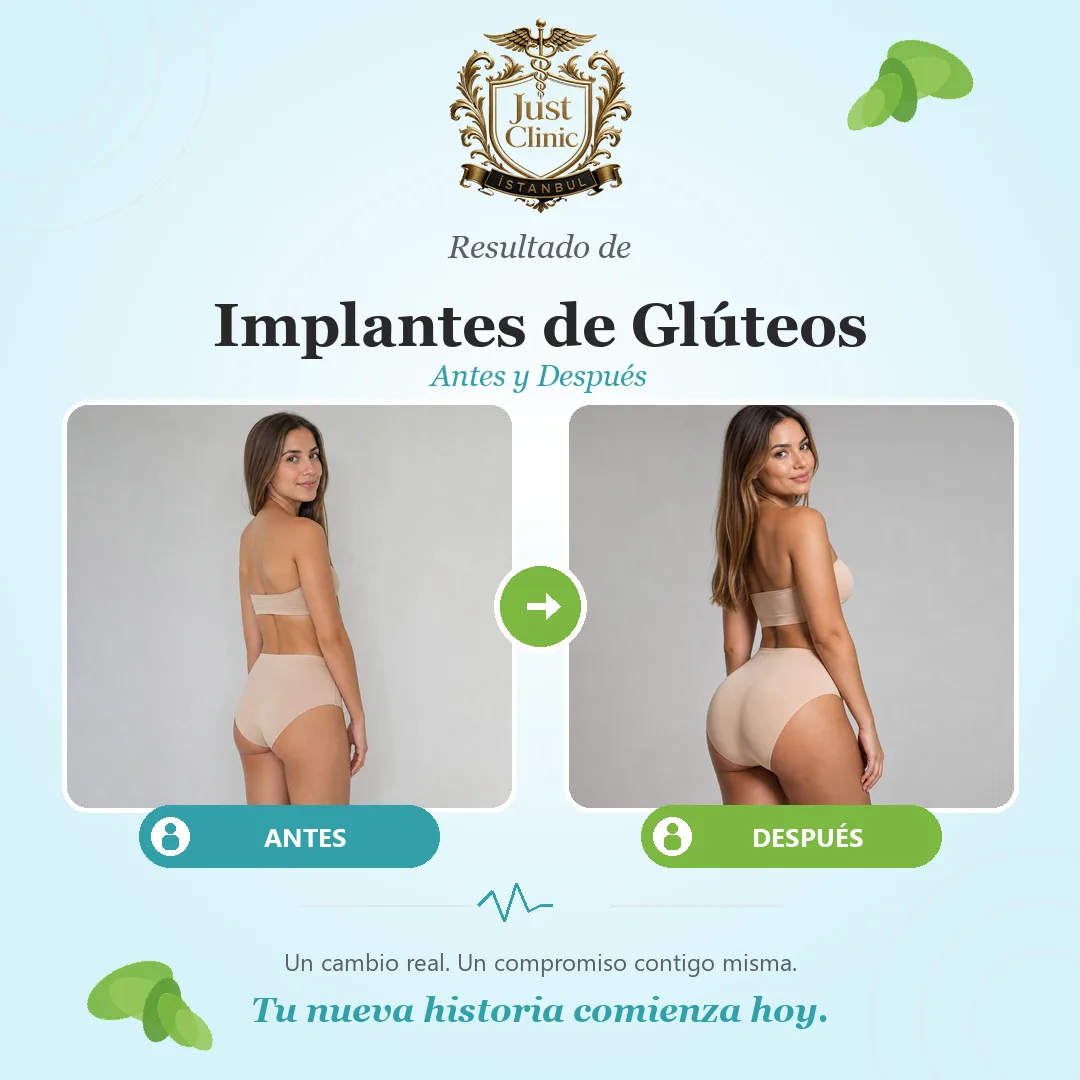
Results and real cases


What are buttock implants (gluteoplasty)?
Buttock implants — also called gluteal implants — augment the buttocks with medical silicone prostheses placed beneath muscle or within gluteal tissue to increase projection and volume. Unlike a Brazilian butt lift, which uses transferred fat, implant surgery delivers a defined augmentation even when donor fat is limited.
Gluteoplasty with implants is a well-established body contouring option for patients who want lasting volume without depending on fat survival. At Just Clinic Istanbul, accredited surgeons assess hip width, tissue thickness and lifestyle goals before recommending implant size, shape and placement plane.
UK interest in gluteal augmentation often starts with comparisons between fat transfer and implants. Our treatment page explains both pathways honestly; for fat-transfer detail see BBL in Istanbul, and for recovery timelines read buttock implants recovery and results.
Unlike breast augmentation — where implant choices are widely discussed in UK media — gluteal implants remain niche, which makes research harder. A dedicated treatment page should answer candidacy, feel, scar placement and how implants age with weight change so you are not relying on social media snippets alone.
Buttock implants vs BBL — how the options compare
Choosing between implants and a Brazilian butt lift is one of the most important decisions in gluteal surgery. Neither option wins for every patient.
| Factor | Buttock implants | BBL (fat transfer) |
|---|---|---|
| Best for | Lean patients with little donor fat | Patients with adequate fat to harvest |
| Feel | Firmer, implant consistency | Softer, natural tissue feel |
| Donor-site contouring | Not included unless liposuction added | Often combines waist/flank lipo |
| Volume stability | Implant volume stable long term | Some fat resorption expected |
| Early recovery focus | Incision protection, garments | Strict sitting restrictions |
Your surgeon may recommend implants when BMI is low, when previous liposuction has reduced donor fat, or when you prefer not to accept partial fat reabsorption. Conversely, patients with generous abdominal or flank fat may achieve excellent dual benefit from BBL alone. Hybrid plans are occasionally discussed but must be clinically justified.
Implants can also appeal to patients who want predictable volume without dieting solely to harvest fat for transfer. Athletic patients with low body fat often fall into this category — they look fit yet desire fuller glutes that training alone has not delivered.
Who is buttock implant surgery suitable for?
Good candidates are healthy adults, ideally non-smokers, who understand scar placement and activity restrictions during recovery. Typical profiles include:
- Athletic or slim builds with flat glutes and insufficient fat for BBL
- Patients seeking permanent augmentation without serial fat-transfer sessions
- Those who have had unsatisfactory fat survival after previous BBL and want a more predictable volume
- Individuals with realistic expectations about shape — athletic roundness rather than extreme projection
Implant surgery is generally unsuitable for active untreated infections, uncontrolled chronic disease, or anyone unable to follow post-operative wound care. Skin quality, hip bone width and previous buttock surgery influence implant selection. Psychological readiness matters: gluteal augmentation is elective surgery with real recovery time.
Patients who have experienced failed BBL with poor fat retention sometimes transition to implants after a cooling-off period and honest reassessment. Others choose implants first to avoid sitting restrictions associated with fat grafting. Neither path is superior in abstract terms — anatomy and lifestyle guide the recommendation.
Smokers must quit before surgery to reduce infection and wound-healing risks. Uncontrolled diabetes, bleeding disorders and recent buttock injections (fillers or non-medical substances) require disclosure because they complicate safe implant placement.
Procedure and types of implants
Implant characteristics
Gluteal implants are made from cohesive medical silicone designed for soft-tissue augmentation. Sizes and projections vary; your surgeon chooses options that respect tissue coverage so edges remain palpable only subtly, if at all. Solid silicone implants differ from breast implants in shape and stiffness — they are engineered for gluteal load-bearing and contour.
Round versus anatomical implant profiles exist in gluteal surgery as in breast surgery. Your hip width and existing muscle bulk influence which profile sits naturally when standing and walking. Extremely large implants increase tension on closure and can look disproportionate on smaller frames — a common counselling point for UK patients arriving with reference photos from social media.
Surgical steps
Surgery is performed under general anaesthesia, typically lasting two to three hours. The surgeon creates a pocket — often subfascial or intramuscular depending on plan — inserts the implant bilaterally, checks symmetry in position and closes incisions in layers. Drains may be used short term. One or two nights in hospital are common for UK travellers.
Combining with liposuction
Some patients add liposuction of the flanks or thighs for a more defined silhouette around augmented glutes. This must be planned conservatively so healing remains straightforward. Combination surgery lengthens operative time and recovery — disclosed clearly at consultation.
Risks and informed consent
Buttock implant surgery carries standard surgical risks — infection, bleeding, seroma, anaesthesia reactions — plus implant-specific possibilities such as capsular contracture, visible edges if tissue cover is thin, asymmetry and rare implant rotation. Serious complications are uncommon in experienced hands but must be understood before you book flights.
Your surgeon explains warning signs: fever, sudden swelling, wound opening or nerve symptoms. UK patients should know how to reach the clinic remotely and when to attend local urgent care if symptoms arise after return. Documented consent is not a formality; it is the framework for shared decision-making.
Implant brands and sizing philosophy
Reputable teams use CE-marked or FDA-cleared silicone implants from established manufacturers. Size selection balances hip width, tissue thickness and desired projection — oversized implants increase edge visibility and tension on closure. Intramuscular versus subfascial pocket choice influences feel and rippling risk; your surgeon explains which plane they prefer for your build.
Recovery and your stay in Istanbul
Recovery after buttock implants is structured but generally more predictable on sitting rules than BBL, because fat graft compression is not the central concern — though incision sites still need protection.
First two weeks
Expect swelling, tightness and limited mobility. Compression garments support tissue adherence. Avoid strenuous squatting, gym workouts and direct pressure on incisions. Short walks aid circulation. Pain is managed with prescribed medication; most patients transition to hotel recovery within one to two days of surgery if clinically stable.
Weeks three to six
Gradual return to desk work from home is often realistic around week three, depending on occupation and swelling. Driving resumes when you can perform an emergency stop comfortably. Light lower-body training waits for surgeon clearance — typically six weeks or longer.
Long-term results
Scars mature over several months, fading within the buttock crease when incision placement allows. Final shape stabilises as swelling resolves. Implants remain unless removed or exchanged for clinical or personal reasons. Remote photo follow-up helps your team monitor symmetry after you return to the UK.
Practical recovery milestones and result timelines are expanded in our buttock implants recovery blog. Orientative fees and package inclusions appear on the buttock implants Turkey cost page.
Sitting is generally tolerated sooner than after BBL, but incision sites still need protection — follow personalised guidance rather than assuming you can sit at a desk for eight hours on day three. Sleep on your front or side if recommended to reduce tension on incisions.
Many UK patients schedule seven to ten nights in Istanbul covering pre-operative assessment, one or two post-operative nights in hospital and a final review before flying. Long-haul flights are usually manageable once you are ambulatory and pain is controlled with oral medication.
Garments support swelling reduction and help implants settle in the planned pocket. Showering instructions typically allow gentle cleansing after forty-eight hours once drains are removed — exact timing varies by surgeon protocol.
Return to running, heavy squats and contact sport should wait until soft tissues have strengthened — often beyond six weeks. Rushing gym culture in the UK makes this discipline hard; plan personal training pauses accordingly.
Why choose Istanbul for buttock implants?
Istanbul offers experienced gluteal surgeons, accredited hospitals and medical tourism infrastructure that UK patients find efficient when researched carefully. Volume of international body contouring can support refined implant workflows — but team selection matters more than city marketing.
English-speaking coordinators at Just Clinic Istanbul arrange consultations, imaging, hospital admission and hotel transfers so your focus stays on informed consent and recovery instructions. Transparent quotes outline surgeon fees, implant costs, facility charges and follow-up — reducing surprises.
Patients comparing pathways should also review BBL in Istanbul with an open mind. The best surgery is the one matched to your anatomy, not the trendiest hashtag.
UK private gluteal implant quotes can exceed Istanbul package totals when hospital nights, anaesthesia and implants are itemised separately. Transparency matters: confirm whether implant brand and size range are included or priced as extras.
Accredited hospitals with ICU backup provide reassurance for body-contouring tourists, even when surgery is elective. Ask whether your procedure occurs in a full hospital or an outpatient surgical unit — both can be appropriate if staffing and emergency cover meet standards.
Post-operative physiotherapy is rarely mandatory but gentle walking prevents venous stasis after gluteal surgery. UK patients sometimes underestimate how much they will appreciate a ground-floor hotel room or lift access during the first forty-eight hours after discharge.
Implant massage protocols differ from breast augmentation — follow your surgeon’s specific guidance rather than generic online advice. Sudden changes in buttock shape, fever or wound leakage should trigger immediate contact with the clinic coordinator.
Your consultation with Just Clinic Istanbul
Begin with a free consultation — often virtual — sharing photos, height, weight and goals. Surgeons evaluate whether implants, BBL or combined contouring is medically sound. You receive a written plan, orientative Istanbul stay length (often seven to ten days) and itemised quote.
We encourage questions about implant brands used, scar location, return to gym timelines and remote follow-up after landing in the UK. No obligation follows your enquiry; clarity is the objective.
When you proceed, coordinators schedule surgery dates, pre-operative tests and English-language discharge summaries. Explore fees via our buttock implants cost guide and read experiences-oriented detail in the recovery and results article. Request your consultation to discuss permanent gluteal augmentation with a team that values honest comparison over sales pressure.
Bring a companion if possible for the first forty-eight hours after discharge — mobility is limited and morale helps. Pack loose trousers, slip-on shoes and garments that do not rub the incision line. Coordinators can recommend hotels with lift access and short transfer times to the clinic for scheduled reviews.
Frequently asked questions
What is the difference between BBL and buttock implants? +
Who is a better candidate for buttock implants? +
Are buttock implants permanent? +
How long is recovery after buttock implant surgery? +
Is gluteal implant surgery safer than BBL? +
Will buttock implants look natural? +
Where are scars placed for buttock implants? +
How much do buttock implants cost in Turkey? +
Other treatments
Ready to take the next step?
Request your free consultation today. Our expert team will respond as soon as possible.