What to know before travelling from the UK
This guide supports UK patients planning arm lift in Istanbul who need a realistic recovery timeline and budget context. Clinical technique is on our treatment page; orientative costs on our price page.
Medical tourism works best with preparation: blood tests, medication list, photos and clear expectations. Just Clinic Istanbul coordinates consultation, clinic, hotel and transfers in English — without exaggerated promises about results or savings.
Plan an Istanbul stay of about 7–10 nights for pre-operative assessment, surgery and first reviews. That is not the same as full recovery, which continues at home in the UK.
Recovery timeline: week by week
Days 1–3 (immediately post-operative)
Rest, prescribed medication, dressings and first reviews. Swelling and fatigue are normal. Keep team contact details handy; fever, severe pain or unusual redness need medical assessment — in Istanbul or locally after return.
Days 4–7
Gradual mobilisation as advised; drain or suture removal when scheduled. Many patients receive fit-to-fly clearance before the return flight if healing follows protocol.
Weeks 2–4
Return to light daily activity may be possible depending on the procedure. Avoid unapproved strain. Remote contact with your coordinator documents progress.
Months 2–6 and beyond
Result refinement, scar maturation and gradual return to sport. Timelines for arm lift vary widely — compare progress with agreed milestones, not social media cases.
Arm lift after weight loss guide
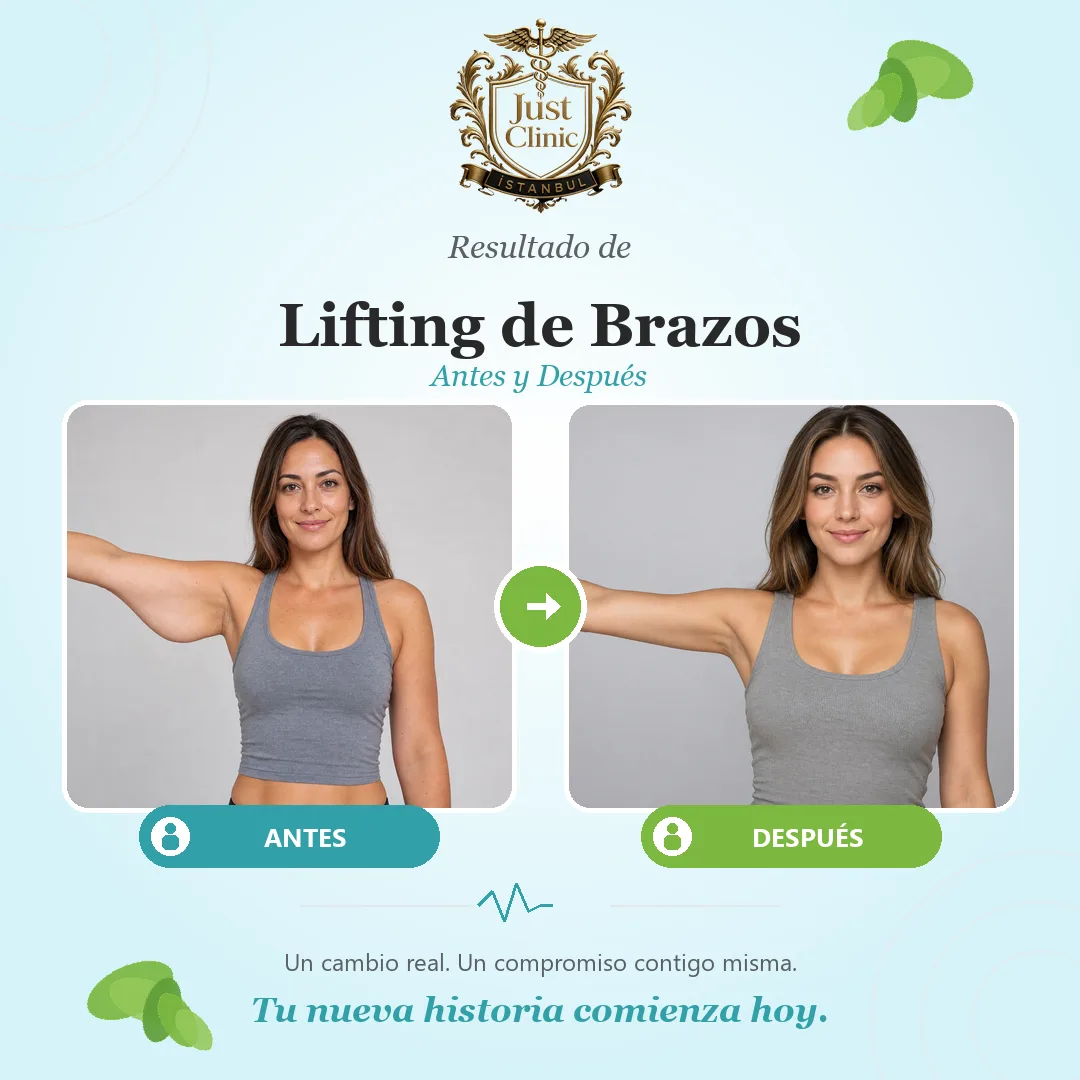
Many UK patients seek brachioplasty after bariatric surgery or major weight loss when bat wings — loose skin on the upper inner arm — persist despite stable weight. An arm lift after weight loss removes redundant skin; liposuction may refine contour when fat remains. Weight should be stable for several months before surgery.
Arm lift scar care
Arm lift scar care starts in Istanbul: follow dressing changes, wear compression as prescribed, protect scars from sun, and use silicone sheets or gel only when your surgeon approves. Scars sit on the inner arm where they are less visible at rest; maturation takes three to six months typically.
Cost factors (no price table here)
Budget depends on technique, extent, hospital level, hotel nights and add-ons. Turkish packages may bundle logistics; UK private quotes often do not. Orientative ranges and package scope are on our price page.
Checklist before flying home to the UK
- Written operative summary and medication plan in English
- Remote review dates and photo instructions
- Coordinator contact for non-emergency questions
- Realistic time off work and domestic support arranged
Recovery at home in the UK
After landing, follow the same rules: medication as prescribed, no unapproved activity, sleep and hydration. Tell your GP about the procedure if you want local continuity. Just Clinic Istanbul remains available for agreed remote follow-up — not as a substitute for NHS emergency care.
Realistic expectations
Social media often shows mature results after months. Your timeline may differ. Patience, adherence to instructions and open communication matter more than rushing back to every habit. For arm lift, see the treatment page (technique) and price page (budget) — this blog does not replace individual consultation.
When to contact Just Clinic Istanbul
If you are unsure whether symptoms are normal, if dates change or you have aftercare questions. Acute emergencies are handled by local care in the UK (NHS 111/999); our team supports coordination, not emergency replacement.
Practical tips for your Istanbul stay
Book a rest-friendly hotel near the clinic, consider a companion for the first night after general anaesthesia, pack loose clothing and document copies. Check travel insurance with a declared medical component — especially for longer procedures.
Summary for UK patients
Plan arm lift in Istanbul with a realistic stay of 7–10 nights, a written quote, remote follow-up and a clear plan for the first weeks at home. Just Clinic Istanbul coordinates the journey — without universal outcome or savings guarantees. Updated for June 2026; confirm written quotes before deposit.